Problematic social media use and adolescent wellbeing: the role of family socioeconomic status across 43 countries
Acknowledgments
This chapter is part of the project DIGINEQ – Digital Time Use, Adolescent Well-Being and Social Inequalities (Grant agreement ID: 101089233; 2024–2029), funded by the European Research Council programme, under the Consolidator Grant Award (PI: Pablo Gracia).
Key insights
For adolescents, Problematic Social Media Use (PSMU) is associated with more psychological complaints and lower life evaluation in all 43 countries we examined. These associations are most pronounced in Anglo-Celtic countries and least problematic in the Caucasus-Black Sea region.
Globally, the relationship between PSMU and lower wellbeing is stronger among adolescents from lower socioeconomic backgrounds than among their higher-status peers.
Socioeconomic differences in the relationship between PSMU and adolescent wellbeing are stronger than for psychological complaints.
Socioeconomic gradients for life evaluation are consistent across Anglo-Celtic, Caucasus-Black Sea, Central-Eastern, Nordic, and Western European countries, but are weak in Mediterranean countries. For psychological complaints, only the Anglo-Celtic region shows socioeconomic gradients in the link between PSMU and wellbeing.
Between 2018 and 2022, the negative association between PSMU and adolescent wellbeing intensified. This increase occurred across all socioeconomic groups and in most of the regions examined.
Introduction
In recent decades, social media has become a fundamental aspect of adolescent life around the world. While social media use can support adolescents with identity development, friendships, and learning processes, it can also expose them to risks, such as cyberbullying, unrealistic beauty standards, and compulsive online behaviour. Previous studies have found that Problematic Social Media Use (PSMU) – a validated scale that captures addictive and compulsive social media behaviours – is associated with higher psychological distress, somatic symptoms, eating disorders, and negative mood in adolescents.[1]
Despite increasing research on this topic, how social media use impacts adolescent wellbeing across socioeconomic groups in different countries is not well understood. This chapter examines the relationship between PSMU and adolescent wellbeing across 43 countries and their association with family socioeconomic status (SES). Family SES refers to the material and social resources available to adolescents in their family environments. It captures differences in household living conditions – such as access to financial assets, housing space, and other everyday resources – that shape young people’s opportunities and constraints. This approach enables us to examine how social inequalities intersect with digital behaviours in influencing adolescent wellbeing.
Previous research has found that adolescent wellbeing is shaped by socioeconomic background. Adolescents from high-SES backgrounds enjoy better mental health than adolescents from lower-SES homes.[2] In the digital age, these inequalities have been reshaped. Digital technologies may continue, and potentially increase, existing SES inequalities in adolescent wellbeing and opportunities.[3] Accordingly, more privileged families are better positioned to guide adolescent social media use in ways that are enriching and safe, while families with fewer socioeconomic resources face greater challenges in protecting their kids from harmful digital experiences.[4] On the other hand, adolescents also grow up in broader societal contexts that differ in their welfare and cultural settings,[5] as well as digital contexts.[6]
Our chapter investigates how the relationship between PSMU and adolescent wellbeing differs by family SES across 43 countries representing six regions we have defined according to broad geographical, cultural, and welfare regime characteristics: Anglo-Celtic, Caucasus-Black Sea, Central-Eastern Europe, Mediterranean, Nordic, and Western Europe. A recent report has shown variations in how PSMU links to adolescent mental health across countries.[7] However, it is still an open question whether socioeconomic inequalities interplay with digital divides in how PSMU links to adolescent wellbeing across different national contexts. Our chapter tackles two key questions:
- How does PSMU relate to adolescent wellbeing across different SES groups?
- Does the role of family SES in the relationship between PSMU and adolescent wellbeing differ across national and regional contexts?
Regional differences in welfare regimes, educational systems, cultural norms, and digital environments may condition how PSMU relates to adolescent wellbeing across SES groups. For example, in regions with stronger welfare states, universal access to public services, and lower inequalities – such as the Nordic countries and some Western European countries – the relationship between PSMU and wellbeing could be relatively unaffected by SES as institutional support may partially compensate for family-level disadvantages. By contrast, in Anglo-Celtic contexts, with strong individualism, larger social inequalities, and weaker welfare states, PSMU may harm low-SES adolescents more. In Mediterranean countries, stronger family ties and informal support networks may partly buffer adolescents from the negative effects of problematic use, despite economic uncertainty. Eastern European societies have experienced major economic and public policy transformations in recent years, which may influence how PSMU links to adolescent wellbeing across society. Our chapter investigates these potential regional patterns with high-quality, cross-country data.
This chapter reveals several important socioeconomic factors that drive the relationship between social media use and adolescent wellbeing. Given the cross-sectional nature of our analyses, this chapter should not be read in causal terms. However, our focus on heterogeneous patterns across SES groups highlights potential underlying inequalities in adolescent PSMU. In doing so, our chapter highlights the need for strategies that strengthen families, schools, and communities to support adolescent digital engagement, particularly among the most disadvantaged SES groups. It also serves as a guide for more equitable approaches in promoting adolescent wellbeing in the digital age by informing policymakers, educators, and practitioners worldwide.
The Health Behaviour in School-aged Children (HBSC) study
The data in this chapter came from the latest publicly available survey data waves from the Health Behaviour in School-aged Children (HBSC) study in 2018 and 2022. The HBSC study was collected using a cluster sampling approach in each country and region of study for adolescents in three age groups: 11–12, 13–14, and 15–16. All participating countries employed representative sampling for their respective school-aged adolescents and followed a standard protocol to ensure that the data collection takes place during the same school year through the same methodological guidelines. Our study includes 43 countries divided into six regions (see Table 7.1).
| Region | Countries |
|---|---|
| Anglo-Celtic | Canada, England, Ireland, Scotland, Wales |
| Caucasus-Black Sea | Armenia, Azerbaijan, Georgia, Russian Federation, Türkiye |
| Central-Eastern Europe | Albania, Bulgaria, Croatia, Czechia, Estonia, Hungary, Kazakhstan, Latvia, Lithuania, North Macedonia, Poland, Republic of Moldova, Romania, Serbia, Slovenia, Ukraine |
| Mediterranean | Cyprus, Greece, Italy, Malta, Portugal, Spain |
| Nordic | Denmark, Finland, Iceland, Norway, Sweden |
| Western Europe | Austria, Belgium, France, Germany, Luxembourg, Netherlands |
Note: Country classification is based on the United Nations Statistics Division’s ‘Standard Country or Area Codes for Statistical Use (M49)’. Not all countries appear in both HBSC waves used in this chapter. The following countries are included for 2018 but not for 2022: Azerbaijan, Belgium, England, France, Georgia, Kazakhstan, Netherlands, Russian Federation, Türkiye, and Ukraine. The following countries were included for 2022 but not for 2018: Bulgaria, Cyprus, and Finland.
We focus on two measures of adolescent subjective wellbeing:
Psychological complaints, measured through four common symptoms: feeling low, irritability, nervousness, and sleeping difficulties. Adolescents reported how often they experienced each symptom over the past six months, ranging from “rarely or never” to “about every day”. These responses were combined into a reliable index of psychological problems and represent a measure of affective wellbeing.
Life evaluation, which comes from the Cantril Scale; the same measure used in Chapter 2 to construct the ranking of the world’s happiest countries. This evaluative measure asks young people to rate their life on a scale from 0 (“worst possible life”) to 10 (“best possible life”), offering a clear picture of how adolescents feel about their overall wellbeing.
Problematic Social Media Use (PSMU) measures compulsive or addictive patterns of use, including the following items: (1) regularly failing to think of anything else but social media, (2) regularly feeling dissatisfied because wanting to spend more time on social media, (3) often feeling bad when not being able to use social media, (4) failing to spend less time on social media, (5) neglecting other activities like hobbies or sport, hiding time spent online, (6) regularly having arguments with others because of social media use, (7) regularly lying to parents or friends about the time spent on social media, (8) often using social media to escape from negative feelings, and (9) having serious conflict with parents or siblings because of social media use. Adolescents reported whether they had experienced each of the nine indicators, and these were summed into a reliable scale ranging from 0 to 9.
Finally, family SES was measured using the Family Affluence Scale (FAS), a harmonised validated measurement included in all HBSC-participating countries that assesses adolescents’ socioeconomic background with indicators of material resources such as cars, computers, holidays abroad, and number of bathrooms across a scale ranging from 0 to 13. We rely on the FAS measure to classify adolescents into low-SES, middle-SES, and high-SES groups within each country, each representing one-third of the scale (bottom, intermediate, and high) based on their position in the scale.
The relationship between problematic social media use and adolescent wellbeing
The summary of all study measures is included in Table 7A.1 in the online appendix. Psychological complaints has a mean of 1.48 and a standard deviation of 1.10, whereas life evaluation has a mean of 7.59 with a standard deviation of 1.90. Family SES is similarly distributed across the three groups of the study sample.
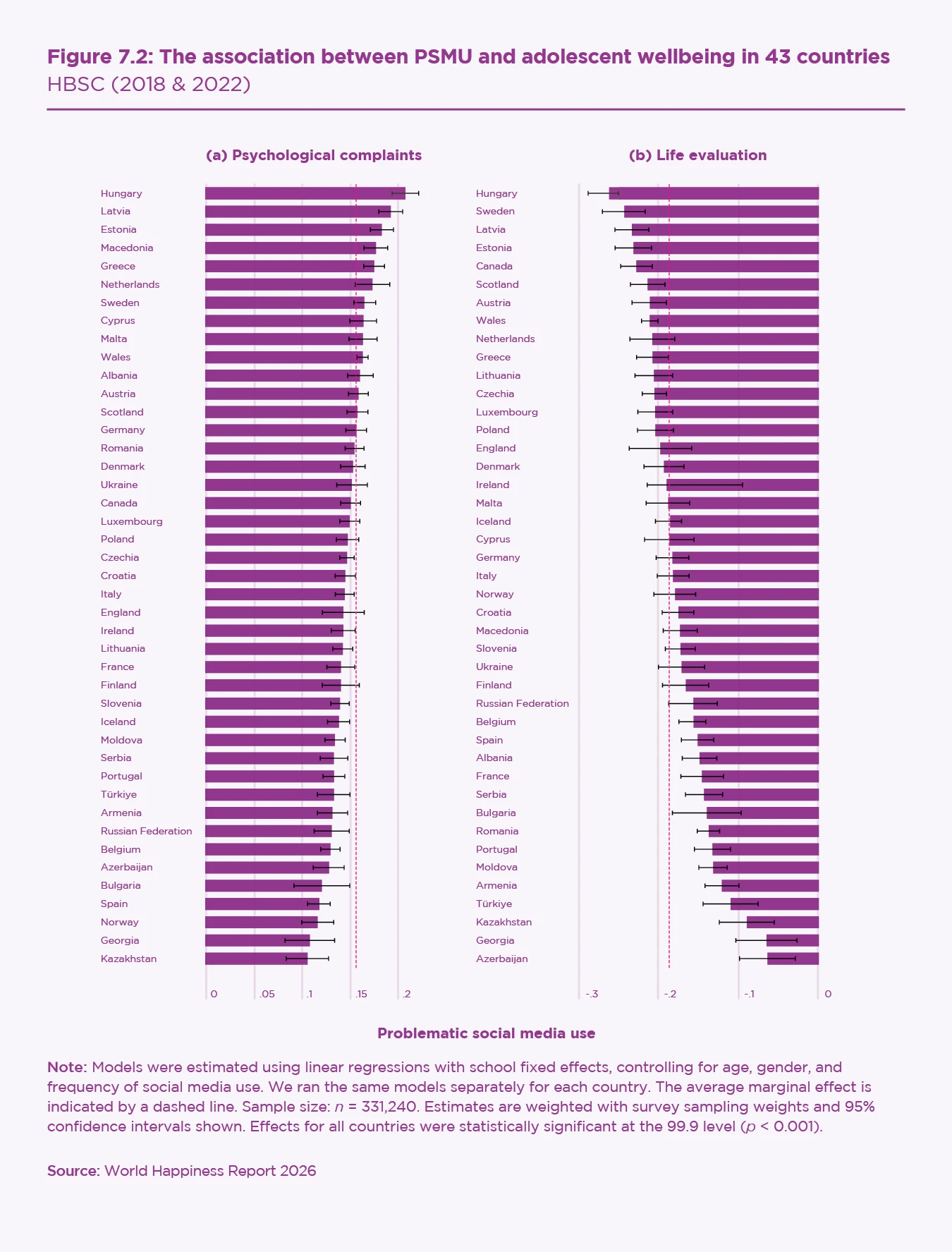
Figure 7.1 highlights clear regional differences in the strength of the association between PSMU and adolescent wellbeing. For psychological complaints, the association is strongest in Central-Eastern Europe, followed closely by the Anglo-Celtic region (with estimated coefficients of approximately 0.16 in both regions). Mediterranean and Western European countries show moderately strong effects, while the Nordic region displays a weaker association. The Caucasus-Black Sea region stands out for having the smallest association between PSMU and psychological complaints (around 0.13). For life evaluation, the regional differences are more pronounced than for psychological complaints (with a wider spread of coefficients across regions). The most negative associations are observed in the Anglo-Celtic and Nordic regions, indicating that PSMU is strongly linked to lower life evaluation in these contexts. Central-Eastern and Western Europe also show substantial negative associations, while Mediterranean countries exhibit somewhat weaker effects. Again, the Caucasus-Black Sea region displays the smallest association, indicating that PSMU is less strongly linked to life evaluations in this region (with an estimated coefficient of about −0.11 on a 0–10 scale).
Taken together, Figure 7.1 shows that, while PSMU is associated with lower wellbeing across all regions, the strength of this relationship varies systematically by region and by wellbeing measure. Central-Eastern Europe emerges as particularly vulnerable with respect to psychological complaints, whereas Anglo-Celtic and Nordic countries show the strongest associations for life evaluation (corresponding to effect sizes of roughly one-tenth to one-fifth of a standard deviation). The Caucasus-Black Sea region consistently shows weaker associations for both outcomes.
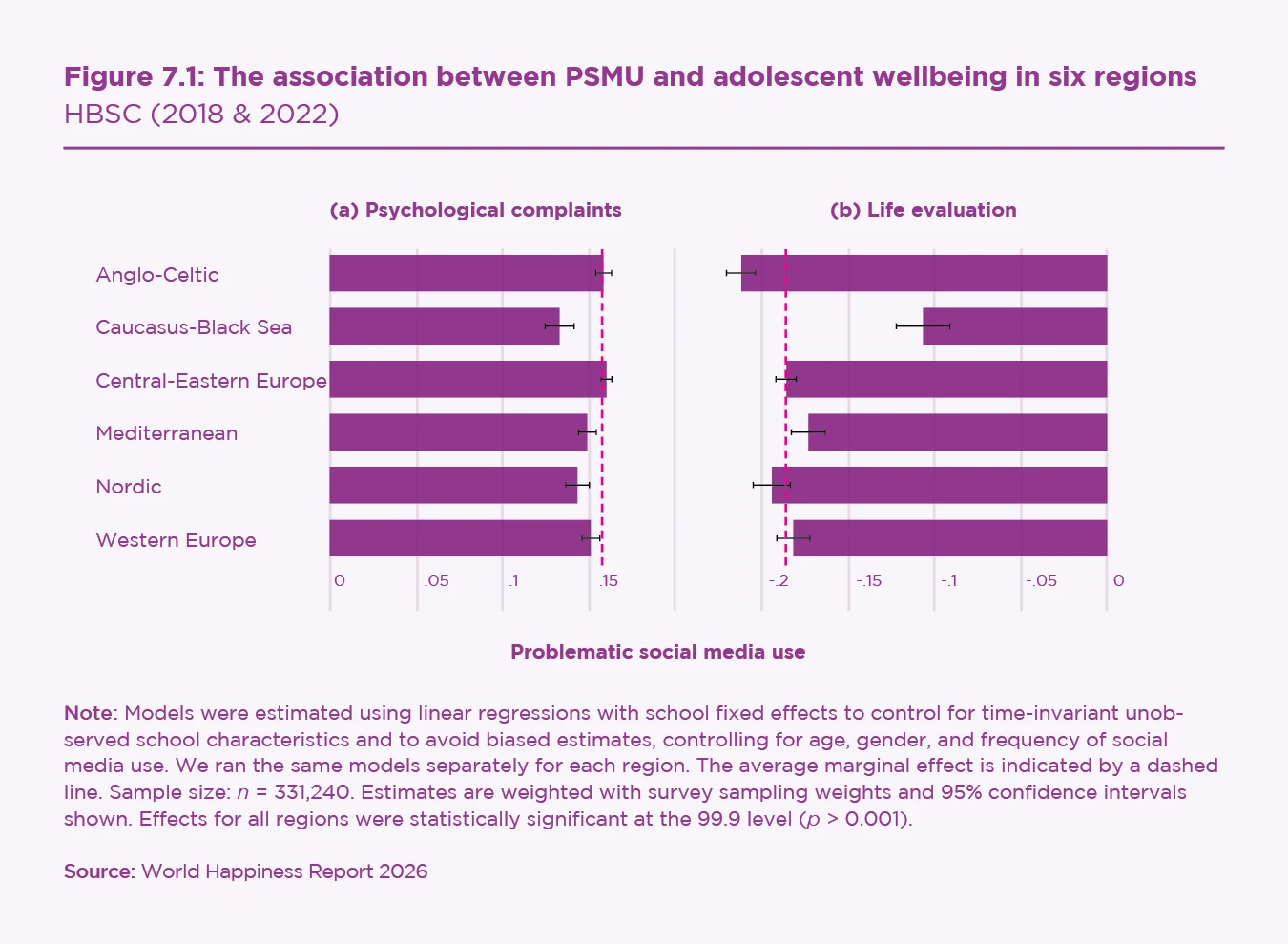
Figure 7.2 presents the country-specific estimates of the association between PSMU and adolescent wellbeing. Two broad descriptive patterns stand out when comparing all countries.
First, the association between PSMU and adolescent wellbeing is remarkably consistent across countries. In all national contexts, higher PSMU is linked to more psychological complaints and lower life evaluation. Across countries, the estimated effects typically correspond to around 0.20 standard deviations for psychological complaints, and 0.15 standard deviations for life evaluation, capturing moderate and statistically significant associations at the population level.
Second, there is substantial cross-national variation in magnitude. Some countries show associations that are stronger than the international average, while others cluster closer to the dashed line. For psychological complaints, countries such as Hungary, Latvia, Estonia, and Greece appear at the upper end of the distribution, indicating a particularly strong link between PSMU and psychological distress (for example, coefficients of around 0.18–0.21, equivalent to roughly one-fifth of a standard deviation). At the other end, countries such as Kazakhstan, Georgia, and Norway show weaker associations, though still generally positive and statistically significant. A similar dispersion is visible for life evaluation, where the negative association with PSMU is strongest in countries like Hungary, Sweden, Latvia, and the Netherlands (with coefficients reaching approximately −0.25), and more muted in others, including Azerbaijan, Georgia, Kazakhstan, and Türkiye (where coefficients are closer to −0.06 to −0.11). These coefficients are about one-third the size of those observed in the countries where the association between PSMU and adolescence life evaluation is strongest.
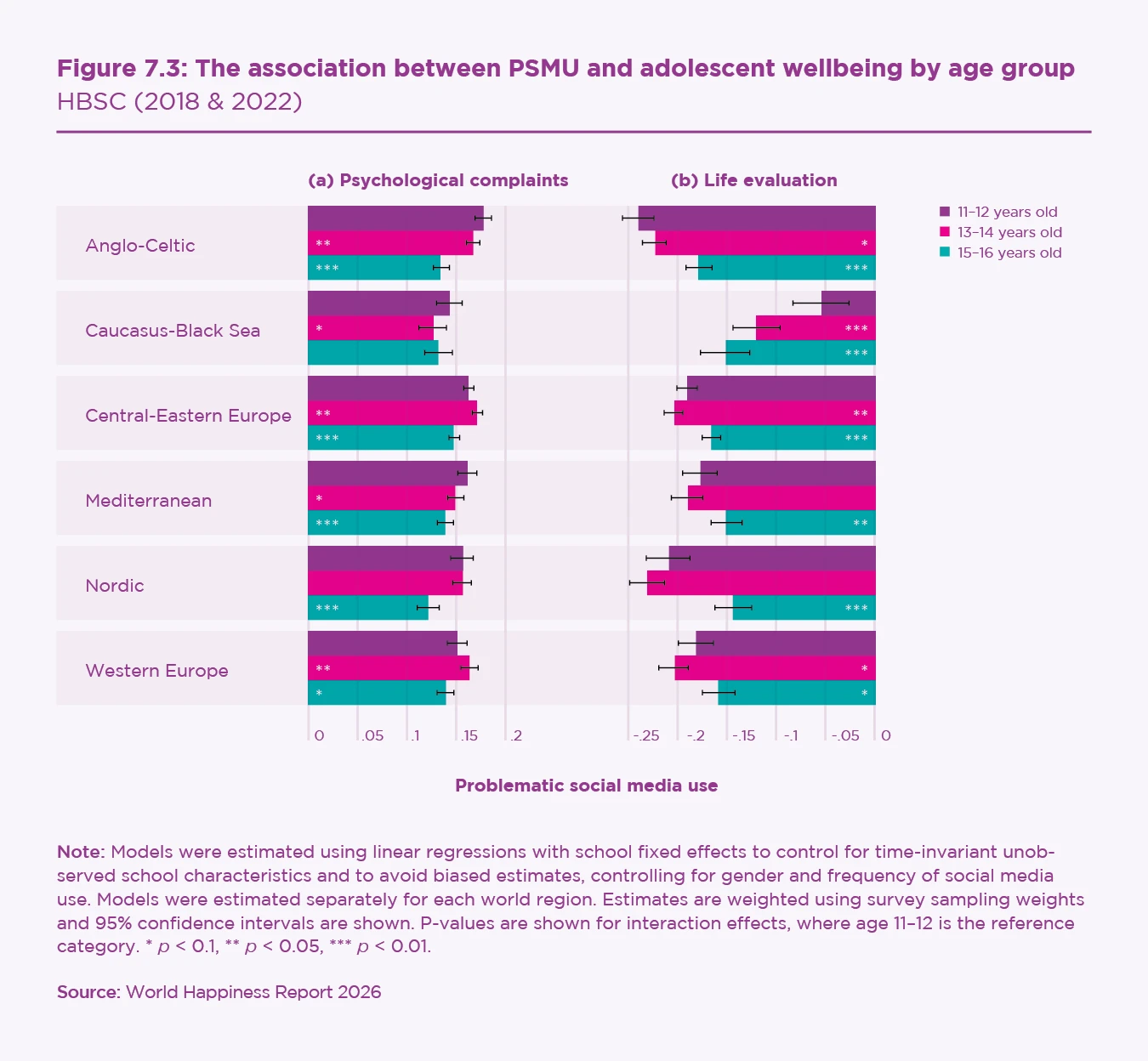
In Figure 7.3, we show how the association between PSMU and adolescent wellbeing varies across age groups (11–12, 13–14, and 15–16), presenting differences across regions.
First, we observe that PSMU is consistently associated with more psychological complaints and lower life evaluation scores across age groups. Across regions, a one-unit increase in PSMU is associated with increases of around 0.12–0.15 points in psychological complaints and decreases of about 0.14–0.18 points in life evaluation. However, this association is overall strongest among younger adolescents (11–12 years) compared to older adolescents (13–14 and 15–16 years).
Younger adolescents appear more vulnerable to the negative wellbeing consequences of problematic digital engagement.
Second, this age gradient is visible in all regions, but is particularly pronounced in Central-Eastern, Anglo-Celtic, Nordic, and Western European countries. In these regions, the association between problematic use and psychological complaints among 11–12-year-olds is approximately 20–35% stronger than among 15–16-year-olds, with interaction effects ranging between 0.02 and 0.04 points. Again, the Caucasus-Black Sea region stands out for showing comparatively smaller age differences overall. A similar pattern is observed for life evaluation. In every region, PSMU is most strongly linked to lower life evaluation among younger adolescents, with the association becoming less negative at older ages. For example, in the Anglo-Celtic and Nordic regions, younger adolescents experience additional reductions in life evaluation of around 0.06 points associated with PSMU, compared to older adolescents. In Mediterranean and Caucasus-Black Sea regions, age differences are present but more muted, with interaction effects generally below 0.03 points and often statistically weaker.
Despite regional and country variations, a key takeaway is that younger adolescents appear more vulnerable to the negative wellbeing consequences of problematic digital engagement. Older adolescents seem relatively more resilient – possibly due to greater emotional regulation, digital experience, or coping strategies. These age-based patterns underscore the importance of considering early developmental stages when assessing disparities in wellbeing in social media settings.
The role of family SES in cross-national perspective
We start by analysing the global associations between PSMU and adolescent wellbeing outcomes. Table 7.2 encompasses the full HBSC sample and shows a clear pattern: adolescents who report higher PSMU are likely to report more psychological complaints and lower life evaluation. This association is strong and highly consistent across all models. Specifically, a one-unit increase in PSMU is associated with an increase of around 0.16 points in psychological complaints (p < 0.001) and a decrease of about 0.19 points in life evaluation (p < 0.001).
Critically, Table 7.2 indicates that PSMU has different consequences for wellbeing across SES groups. Adolescents from low-SES households are the most vulnerable to PSMU. Among their peers from middle-SES families, and particularly among those from high-SES households – especially when examining life evaluation for the latter – the relationship between PSMU and wellbeing appears somewhat less damaging. Compared to low-SES adolescents, the association between PSMU and psychological complaints is weaker among high-SES adolescents (interaction β ≈ −0.01, p < 0.001), corresponding to a small but consistent attenuation of around 5–10% relative to the reference of adolescents from higher-SES backgrounds. Similarly, for life evaluation, the negative association of PSMU is partially attenuated among middle-SES and high-SES adolescents, with positive interaction terms of around 0.01–0.03 points (p < 0.01), which represents roughly a 10% reduction in the size of the negative association, compared to low-SES adolescents. These findings show moderate but consistent SES gradients in the association between PSMU and adolescent wellbeing.
Taken together, these results highlight two important messages. First, problematic social media use is consistently associated with lower wellbeing when applying pooled analyses with school fixed effects and multiple control variables. Second, adolescents from more disadvantaged SES backgrounds are more harmed by PSMU in terms of psychological complaints, and particularly in life evaluation, compared to adolescents from higher SES groups.
| Psychological complaints | Life satisfaction | Psychological complaints | Life satisfaction | |
|---|---|---|---|---|
| PSMU | 0.157*** | −0.187*** | 0.161*** | −0.198*** |
| (0.001) | (0.002) | (0.002) | (0.003) | |
| Low-SES # PSMU Reference category | ||||
| Mid-SES # PSMU | −0.003 | 0.014*** | ||
| (0.002) | (0.004) | |||
| High-SES # PSMU | −0.008*** | 0.025*** | ||
| (0.002) | (0.004) | |||
| N | 331,240 | 331,240 | 331,240 | 331,240 |
Note: Results from linear regression models with school fixed effects to control for time-invariant unobserved school characteristics and to avoid biased estimates. SES is measured with the Family Affluence Scale and interacts with PSMU. All models control for age, gender, and frequency of social media use. Survey sampling weights are applied to ensure representativeness. Standard errors are added in parentheses. Data come from HBSC 2017/18 and 2022. *** p < 0.001. n = 331,240.
Figure 7.4 presents the association between PSMU and adolescent wellbeing by SES group. For psychological complaints, we observe modest socioeconomic gaps in most regions. In Central-Eastern, Western European, Mediterranean, and Nordic countries, differences between low-SES and high-SES adolescents are relatively small and statistically non-significant. An exception here is the Anglo-Celtic region, which displays the largest socioeconomic gap, with low-SES adolescents experiencing a stronger increase in psychological complaints as problematic use rises (interaction coefficient ≈ −0.017, p < 0.01). Interestingly, the Mediterranean and Caucasus-Black Sea regions show an interesting curvilinear pattern: the association between PSMU and psychological complaints is larger among adolescents from middle-SES groups, compared to both their lower- and higher-SES peers.
When turning to life evaluation, we observe larger and more consistent SES disparities. SES gradients are observed in the Anglo-Celtic, Central-Eastern, Western European, and Nordic regions, with low-SES adolescents displaying more negative associations than their high-SES peers, with statistically significant interaction coefficients ranging from approximately 0.02–0.03 (p < 0.05 or lower). For the Caucasus-Black Sea region, despite weaker effects in terms of statistical strength, we observe that low-SES adolescents show more pronounced negative associations than their counterparts from higher SES groups (interaction coefficient ≈ 0.033, p < 0.10). Finally, the Mediterranean region shows smaller and statistically non-significant socioeconomic differences for life evaluation, indicating weaker SES stratification in this region.
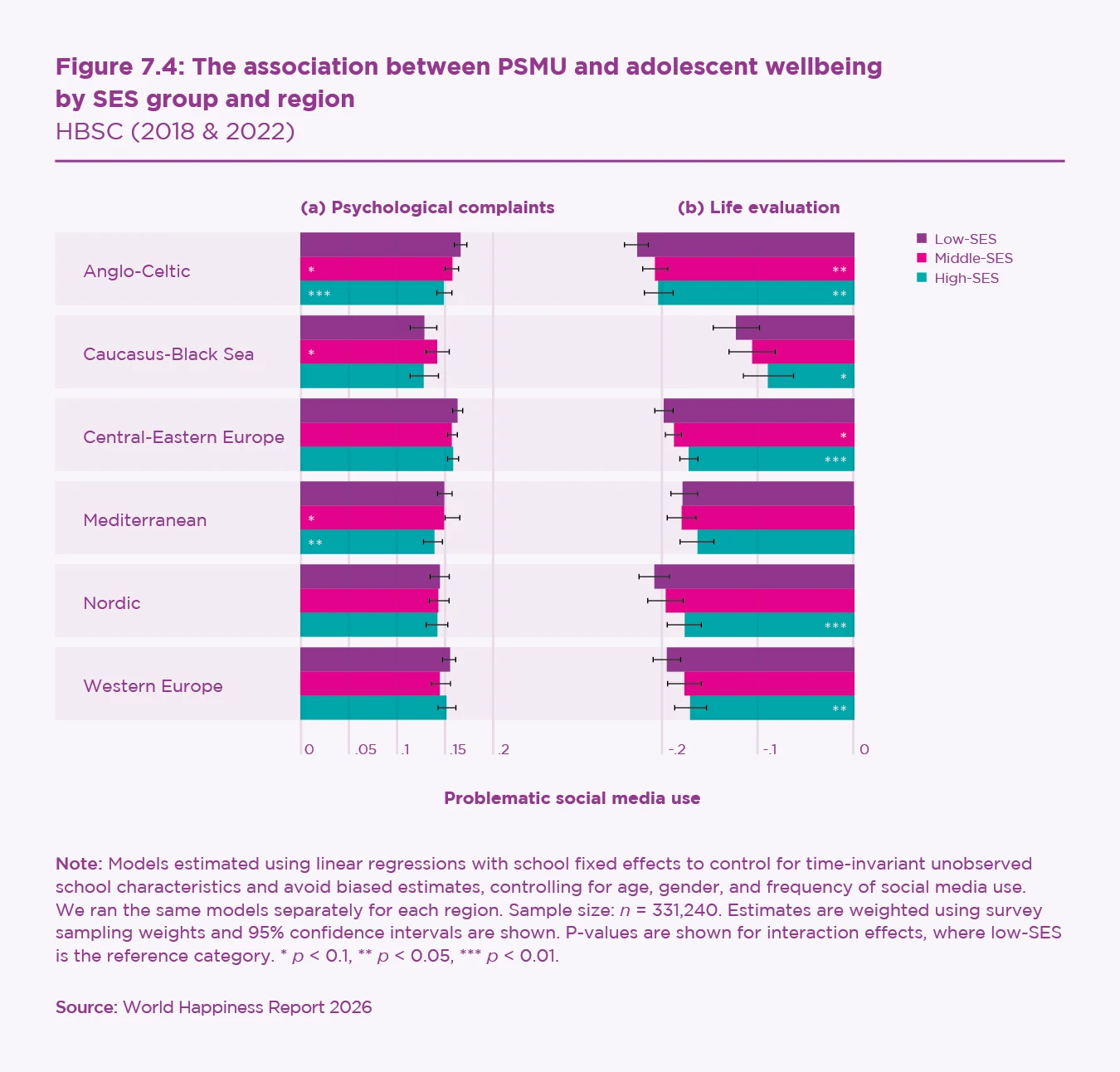
Overall, Figure 7.4 indicates that the relationship between PSMU and wellbeing is stratified by SES. Yet, this relationship differs depending on the outcome and region that we examine. For psychological complaints, SES gaps are small across regions, except for the Anglo-Celtic region, where low-SES adolescents experience a stronger increase in psychological complaints as problematic use rises. For life evaluation, we observe more consistent SES differences across most regions, with lower-SES adolescents showing stronger declines in life evaluation as problematic use increases, except in Mediterranean countries, where we observe small and not statistically significant differences across SES groups.
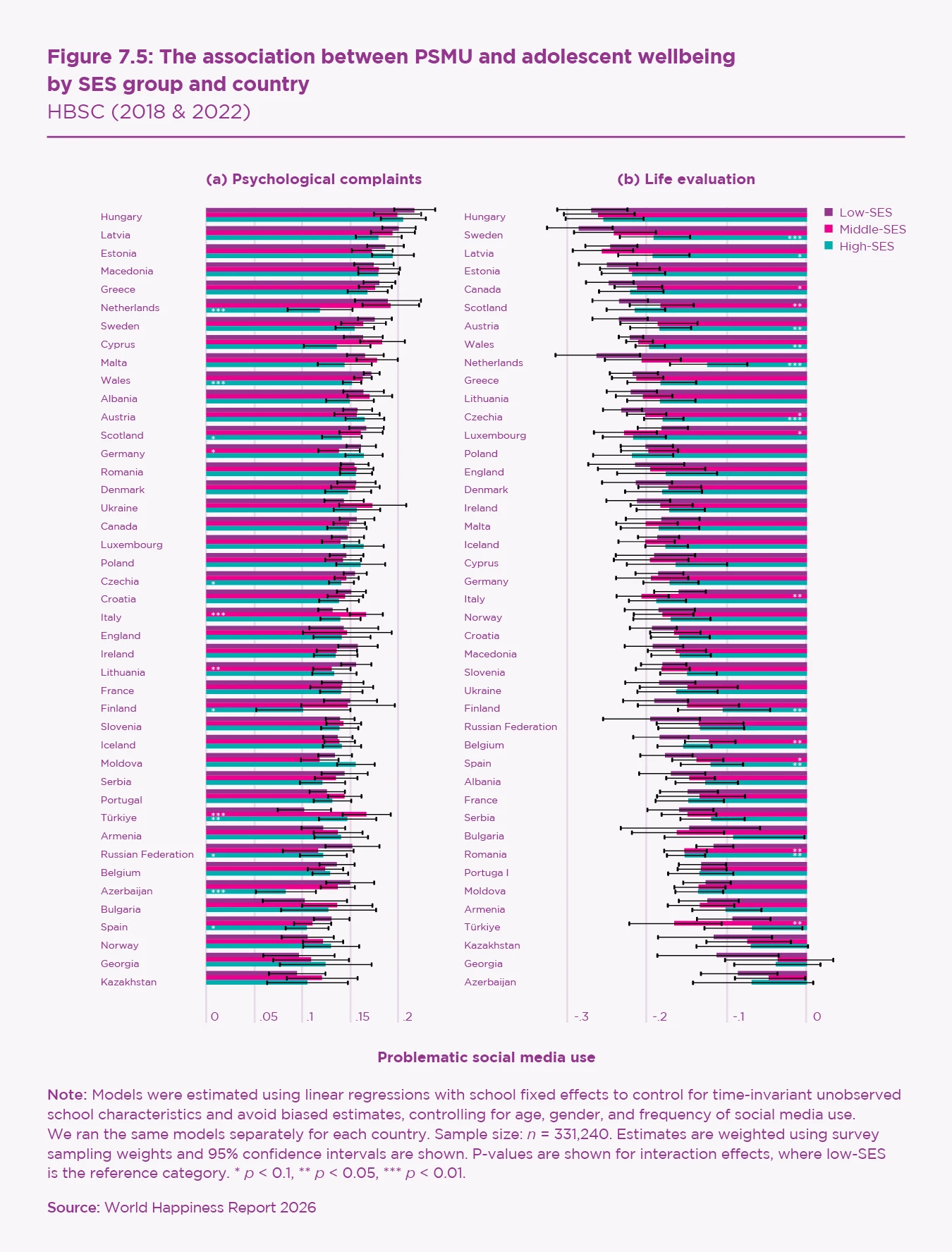
In Figure 7.5, we address the relationship between PSMU and adolescent wellbeing by SES groups across all 43 countries in our study. SES differences in the association between PSMU and adolescent wellbeing vary substantially by outcome and country. For psychological complaints, statistically significant differences between low-SES and high-SES adolescents appear in seven countries, most notably the Netherlands, Azerbaijan, Finland, Spain, Wales, and Russian Federation. Consistent with the regional analyses, our country-specific analyses indicate that PSMU is associated with psychological complaints in broadly similar ways across SES groups in most national contexts.
For life evaluation, results differ markedly, where SES gradients are larger and more consistent across countries. Statistically significant differences between low-SES and high-SES adolescents appear in 14 countries (around one third of the sample). We find particularly strong and statistically significant differences by family SES in the Netherlands, Sweden, Austria, Czechia, Finland, Spain, Scotland, Belgium, and Canada. Other countries, notably Norway, Bulgaria, and Kazakhstan, show weak or non-significant SES moderation for life evaluation.
Overall, consistent with the regional analyses, SES is a weak moderator for the link between PSMU and psychological complaints in most countries, but it shows larger and more consistent variations for life evaluation. The fact that the country-specific differences by SES do not apply consistently across countries from the same region justifies the consideration of the country level as a dimension of study.
Differences between 2018 and 2022
The previous analyses documented associations between PSMU and adolescent wellbeing across countries and socioeconomic groups. We now turn to a key follow-up question: has this relationship changed over recent years? To address this, we compare results from the 2018 and 2022 waves of the HBSC study, focusing on countries that participated in both surveys.
Adolescents with higher problematic use report steeper increases in psychological complaints and sharper declines in life evaluation in 2022 compared to four years earlier.
Figure 7.6 shows clear changes. For both psychological complaints and life evaluation, the association with PSMU is more negative in 2022 than in 2018. Adolescents with higher problematic use report steeper increases in psychological complaints and sharper declines in life evaluation in 2022 compared to four years earlier. The baseline association between PSMU and psychological complaints rises significantly from 0.144 in 2018 to 0.166 in 2022 (p < 0.001), while the negative association with life evaluation strengthens from –0.177 to –0.217 (p < 0.001). These changes indicate a substantively meaningful increase in the overall strength of the PSMU–wellbeing relationship over time. Additional analyses presented in Table 7A.2 in the online appendix indicate that these changes were confined to all regional groups, except for the Nordic countries for life evaluation, and for the Caucasus-Black Sea countries for both psychological complaints and life evaluation.
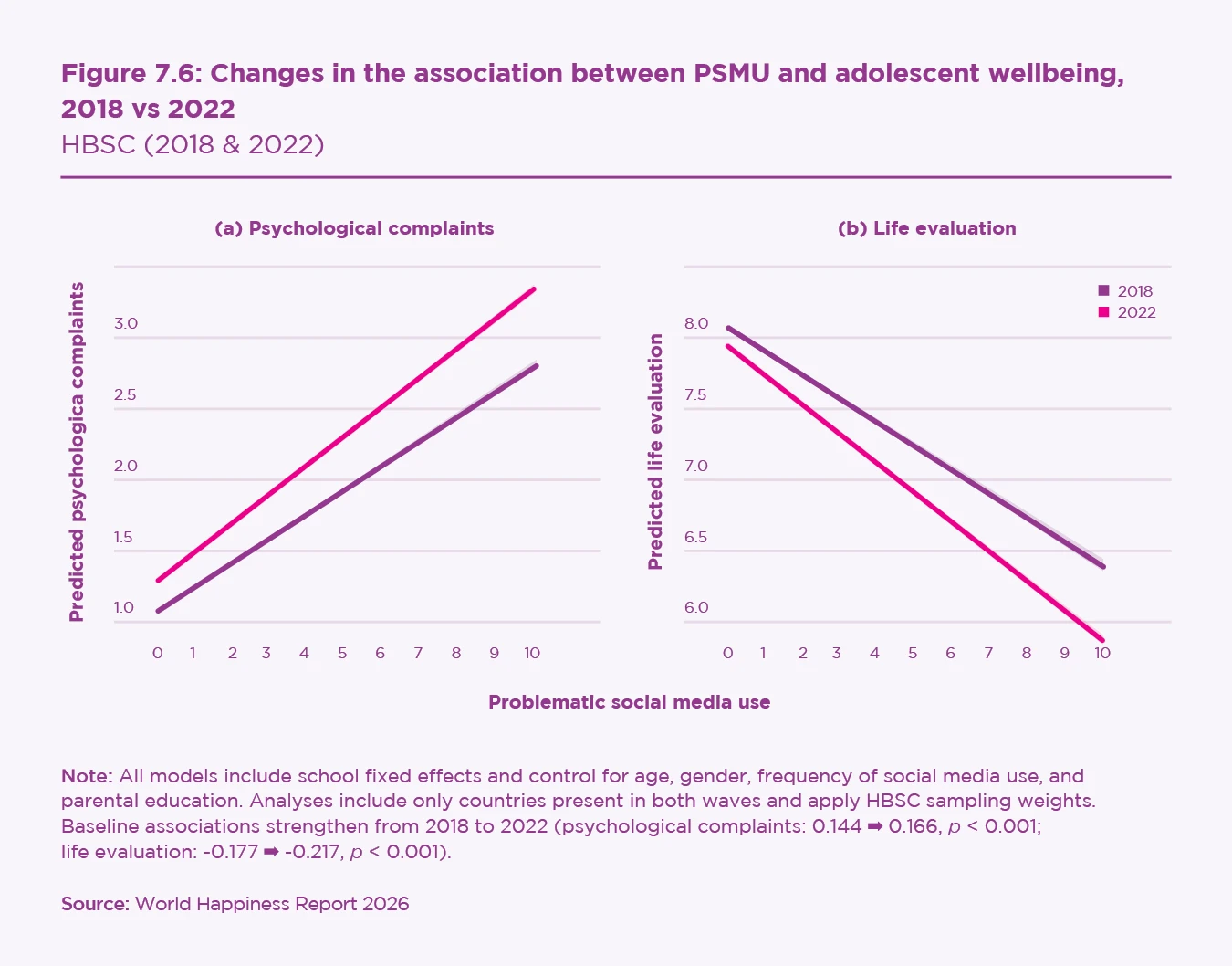
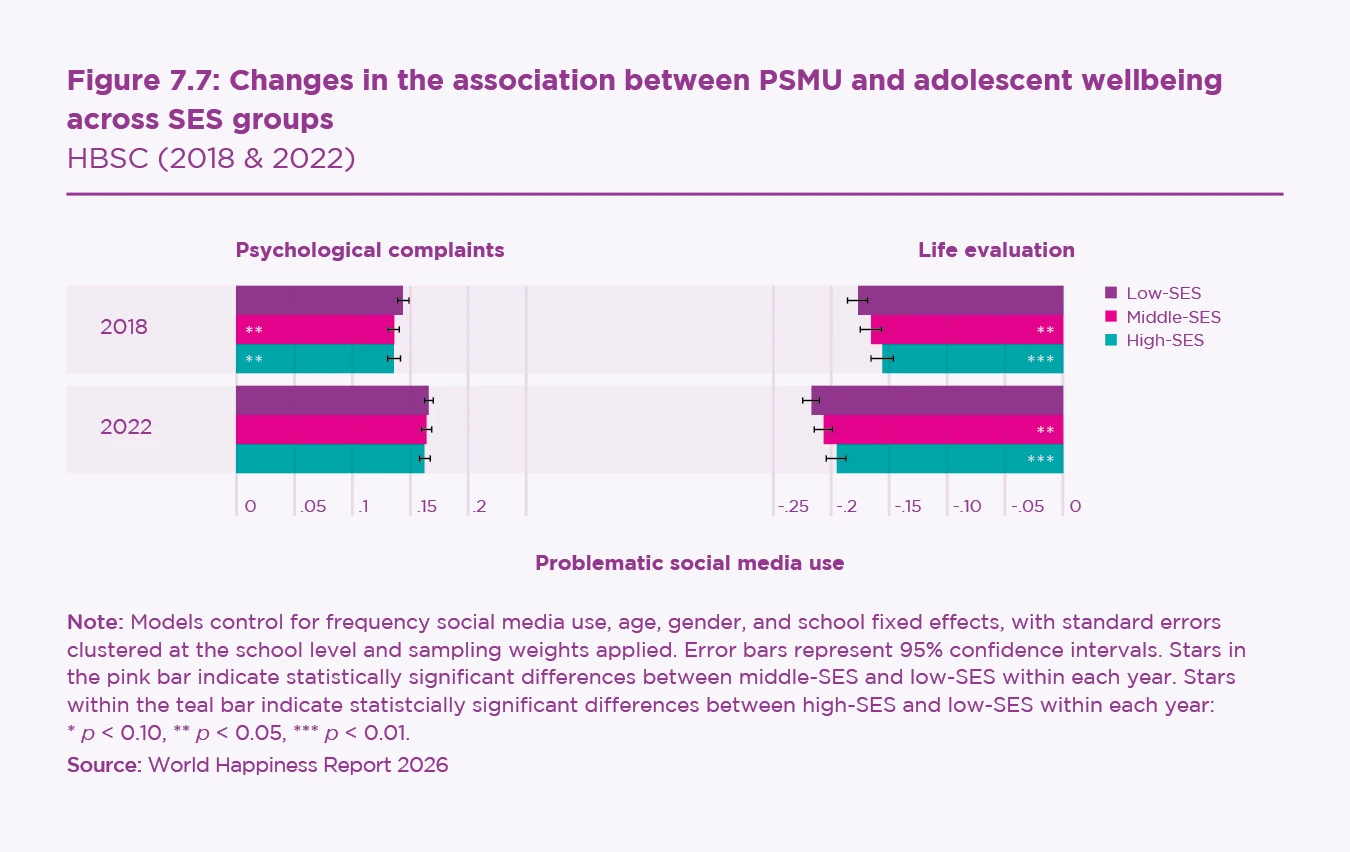
Figure 7.7 shows the estimated coefficients of the association between PSMU and adolescent wellbeing across SES groups in 2018 and 2022. Across both outcomes, the association strengthened for all SES groups between 2018 and 2022, indicating that SES gaps did not widen through this period. For psychological complaints, coefficients increased from approximately 0.14–0.15 in 2018 to around 0.16–0.17 in 2022, with quite similar increases for all SES groups. For life evaluation, the negative association with PSMU becomes more pronounced for all SES groups over time. We observe shifts from −0.18 in 2018 to −0.22 in 2022 among low-SES adolescents and from −0.16 to −0.20 for middle-SES adolescents, with a change from −0.15 to −0.19 among high-SES adolescents. Additionally, Table 7A.2 in the online appendix confirms that this stability across SES groups is constant across regions, except for Caucasus-Black Sea region, where we find larger SES gaps for life evaluation in 2022 than in 2018.
Overall, the deterioration in adolescent wellbeing associated with problematic social media use between 2018 and 2022 appears to reflect a general shift affecting all socioeconomic groups, rather than a reconfiguration of inequality. One plausible explanation is that the COVID-19 pandemic, which dramatically increased adolescents’ reliance on digital technologies through remote schooling, reduced face-to-face interaction, and expanded online leisure time. These changes may have amplified the psychological and emotional costs of PSMU for adolescents overall, without substantially altering the underlying socioeconomic structure of vulnerability with regards to adolescent social media use.
Conclusion
This chapter has investigated how the relationship between Problematic Social Media Use (PSMU) and adolescent wellbeing differs by family socioeconomic status (SES) across 43 countries clustered in six regions that capture different geographical, political, and cultural factors: Anglo-Celtic, Caucasus-Black Sea, Central-Eastern Europe, Mediterranean, Nordic Europe, and Western Europe.
Our results reveal a clear and consistent pattern across all 43 countries: higher PSMU is associated with lower adolescent wellbeing, including more psychological complaints and lower life evaluation. These associations are strongest in Central-Eastern Europe and the Anglo-Celtic region, and weakest in the Nordic countries, and especially the Caucasus-Black Sea region. For life evaluation, the most negative associations appear in Anglo-Celtic and Nordic countries, while the Caucasus-Black Sea region shows the weakest links. Although the intensity of the relationship between PSMU and adolescent wellbeing varies by regions and the measure of wellbeing, our initial analyses confirm that PSMU is a widespread and cross-nationally consistent correlate of lower adolescent wellbeing. We also identify an age gradient across most regions: the relationship between PSMU and adolescent wellbeing is strongest among younger adolescents (ages 11–12) and weaker at older ages (ages 13–14 and 15–16) across most regions. This indicates that early adolescence is a particularly sensitive developmental period for adolescent social media use.
Low-SES adolescents bear the greatest costs of compulsive or addictive digital behaviours, while their more advantaged peers are relatively more protected from these harms.
Critically, our results indicate socioeconomic differences in the relationship between PSMU and adolescent wellbeing. While PSMU is a widespread risk factor for adolescent wellbeing across countries, this relationship is unequally distributed across socioeconomic groups. The relationship between PSMU and lower adolescent wellbeing is stronger for adolescents from lower SES families compared to their peers from higher SES backgrounds. Low-SES adolescents bear the greatest costs of compulsive or addictive digital behaviours, while their more advantaged peers are relatively more protected from these harms. This gradient underlines how SES inequalities operate in the digital age, where online environments represent a new arena to understand social inequalities in adolescent wellbeing. This suggests that high-SES families are better able to mobilise resources – such as family support, digital parenting strategies, and digital skills – to partly buffer the negative correlates of PSMU, compared to lower-SES adolescents.
Interestingly, the results of this chapter indicate that SES gradients in the association between PSMU and adolescent wellbeing are stronger for life evaluation than for psychological complaints. This difference likely reflects that evaluative wellbeing is more sensitive to social comparisons, perceived opportunities, and material resources, while psychological complaints capture more immediate emotional symptoms that are less directly shaped by socioeconomic conditions. These results underscore the importance of distinguishing between different measures of adolescent wellbeing in digital contexts. Ultimately, this is an important finding for the happiness and wellbeing literature that highlights the need for future stratification and digital divides research addressing how socioeconomic processes operate differently across emotional and evaluative outcomes.
Cross-nationally, differences in the association between PSMU and adolescent wellbeing across SES groups vary across regions. For psychological complaints, SES gaps are generally modest across most regions. The main exception is the Anglo-Celtic region, where low-SES adolescents experience a more pronounced increase in psychological complaints as PSMU intensifies. SES differences are residual within the Central-Eastern, Western Europe, and Nordic regions, indicating that emotional symptoms linked to PSMU are only weakly socially patterned in most regional contexts. Interestingly, we find a curvilinear pattern for the Mediterranean and Caucasus-Black Sea regions, where the association between PSMU and psychological complaints is larger among adolescents from middle-SES groups, compared to both their lower- and higher-SES peers. By contrast, for life evaluation, SES gradients are more substantial and consistent across regions. Clear SES gradients emerge in the Anglo-Celtic, Central-Eastern, Western Europe, and Nordic regions, followed by the Caucasus-Black Sea region, with low-SES adolescents displaying more negative associations between PSMU and life evaluation, compared to their peers from more advantaged SES groups. The Mediterranean region shows smaller SES differences in the association between PSMU and life evaluation.
The large SES gaps found in Anglo-Celtic countries may reflect their free-market-oriented welfare regimes,[8] where weaker redistribution may foster greater social divides, leading to structural inequalities associated with online processes shaping adolescents’ daily lives. However, the institutional argument does not match with our findings for other regions. For example, the Caucasus-Black Sea region, with more limited universal youth support and socioeconomic development, emerges as having less clear SES gradients in the association between PSMU and adolescent wellbeing. Similarly, the Nordic region does not emerge as the one where the association between PSMU and adolescent wellbeing is less stratified by family SES, despite their well-known universalistic welfare systems and low-income inequality,[9] suggesting that digital divides may persist through mechanisms not easily offset by welfare protections. Conversely, Mediterranean countries appear relatively equal, potentially reflecting the buffering role of family ties, community networks, or culturally embedded forms of social support, which could mitigate the social differentiation of digital harms, particularly for life evaluations. Although institutional arrangements and welfare systems may shape adolescents’ exposure to digital risks to some degree, they do not fully account for the observed patterns. How different societal contexts can provide safe internet experiences to all adolescents and families across different backgrounds is an important area for further study.
Finally, our comparison of the 2018 and 2022 waves of the HBSC study shows that the association between PSMU and adolescent wellbeing has strengthened over time. Across most regions, adolescents with high levels of problematic use report higher psychological complaints and lower life evaluation in 2022 than in 2018. This intensification coincides with the COVID-19 pandemic and the broader acceleration of digital engagement in young people’s daily lives. Crucially, this deterioration is visible across all socioeconomic groups. While SES remains a powerful source of inequality, recent trends suggest that the emotional and psychological costs of PSMU have increased for adolescents more generally, rather than reflecting important changes in existing socioeconomic divides.
Taken together, these findings underline the need for policies that address both the risks of PSMU and the unequal burden faced by disadvantaged adolescents in digital settings. Interventions should combine family-level support, school-based digital literacy, and accessible mental health services, while remaining sensitive to cultural and contextual differences in how young people experience and evaluate their lives online. Creating more equitable digital environments will require regulating platforms, as well as strengthening the social resources that help adolescents navigate a highly digitalised and unequal world.
This chapter is not without limitations. Our study cannot account for bidirectionality, namely that the direction of causality between PSMU and wellbeing cannot be disentangled, which is an issue that has been widely discussed in the academic literature on social media and adolescent wellbeing.[10] To this end, a combination of longitudinal data and causal designs, as well as lab and field experimental data are needed. To date, no longitudinal surveys have applied a large, harmonised, multi-national, cross-national design on the causal relationship between PSMU and adolescent wellbeing across regions. Our study must be read as a first approximation to understand mechanisms of social inequalities in this area by adopting a micro-macro approach. Future studies should further analyse the role of specific macro-level explanatory factors in shaping the relationship between PSMU and adolescent wellbeing.
To conclude, the results of this chapter highlight the need for policies that not only address the risks of PSMU but also target the unequal burden faced by disadvantaged adolescents. This includes investing in family support, school-based digital literacy programs, and accessible mental health services that are sensitive to socioeconomic disparities. By combining efforts at the family, school, and policy level, societies can work toward a more equitable digital environment where all young people – regardless of background – are able to engage with social media in ways that support, rather than undermine, their wellbeing.
References
Bohnert, M., & Gracia, P. (2023). Digital use and socioeconomic inequalities in adolescent well-being: Longitudinal evidence on socioemotional and educational outcomes. Journal of Adolescence, 95(6), 1179–1194. https://doi.org/10.1002/jad.12193
Boniel-Nissim, M., Marino, C., Galeotti, T., Blinka, L., Ozoliņa, K., et al. (2024). A focus on adolescent social media use and gaming in Europe, Central Asia and Canada: Health Behaviour in School-aged Children international report from the 2021/2022 survey. World Health Organization, Regional Office for Europe. https://iris.who.int/handle/10665/378982
Breen, R., & Müller, W. (2020). Education and intergenerational social mobility in Europe and the United States. Stanford University Press.
Bronfenbrenner, U., & Morris, P. A. (2007). The bioecological model of human development. Handbook of Child Psychology, 1. https://doi.org/10.1002/9780470147658.chpsy0114
Büchi, M., & Hargittai, E. (2022). A Need for Considering Digital Inequality When Studying Social Media Use and Well-Being. Social Media + Society, 8(1). https://doi.org/10.1177/20563051211069125
Corak, M. (2013). Income inequality, equality of opportunity, and intergenerational mobility. Journal of Economic Perspectives, 27(3), 79–102. https://doi.org/10.1257/jep.27.3.79
Esping-Andersen, G. (2015). Welfare regimes and social stratification. Journal of European Social Policy, 25(1), 124–134. https://doi.org/10.1177/0958928714556976
Livingstone, S., Mascheroni, G., & Staksrud, E. (2018). European research on children’s internet use: Assessing the past and anticipating the future. New Media & Society, 20(3), 1103–1122. https://doi.org/10.1177/1461444816685930
Orben, A., & Przybylski, A. K. (2019). The association between adolescent well-being and digital technology use. Nature Human Behaviour, 3(2), 173–182. https://doi.org/10.1038/s41562-018-0506-1
Reiss, F. (2013). Socioeconomic inequalities and mental health problems in children and adolescents: a systematic review. Social Science & Medicine, 90, 24–31. https://doi.org/10.1016/j.socscimed.2013.04.026
Shannon, H., Bush, K., Villeneuve, P. J., Hellemans, K. G., & Guimond, S. (2022). Problematic social media use in adolescents and young adults: Systematic review and meta-analysis. JMIR Mental Health, 9(4), e33450. https://doi.org/10.2196/33450
Van den Eijnden, R., Koning, I., Doornwaard, S., Van Gurp, F., & Ter Bogt, T. (2018). The impact of heavy and disordered use of games and social media on adolescents’ psychological, social, and school functioning. Journal of Behavioral Addictions, 7(3), 697–706. https://doi.org/10.1556/2006.7.2018.65
Van Deursen, A. J., & Helsper, E. J. (2015). The third-level digital divide: Who benefits most from being online? In Communication and Information Technologies Annual (Vol. 10, pp. 29–52). Emerald Group Publishing Limited. https://doi.org/10.1108/S2050-206020150000010002
Van Rooij, A. J., Schoenmakers, T. M., Van den Eijnden, R. J., & Van de Mheen, D. (2010). Compulsive internet use: The role of online gaming and other internet applications. Journal of Adolescent Health, 47(1), 51–57. https://doi.org/10.1016/j.jadohealth.2009.12.021
World Health Organization, Regional Office for Europe & HBSC. (2024). A focus on adolescent social media use and gaming in Europe, central Asia and Canada: Health Behaviour in School-aged Children international report from the 2021/2022 survey. Volume 6. WHO Regional Office for Europe. https://www.hbsc.org/publications/reports/a-focus-on-adolescent-social-media-use-and-gaming-in-europe-central-asia-and-canada/