Social media use and wellbeing in the Middle East and North Africa
Acknowledgments
We would like to thank Felix Cheung, Jan-Emmanuel de Neve, John Helliwell, Lara Aknin, and Kostadin Kushlev for useful suggestions on earlier versions of this chapter. This chapter has received funding from the European Union’s Horizon 2020 research and innovation programme under grant agreement No. 101094546. Views and opinions expressed are those of the author(s) only and do not necessarily reflect those of the European Union or funding partners. Neither the European Union nor the granting authority can be held responsible for them. Francesco Sarracino and Fengyu Wu would like to gratefully acknowledge the support of the Observatoire de la Compétitivité, Ministère de l’Economie, DG Compétitivité, Luxembourg, and STATEC, the National Statistical Office of Luxembourg. Views and opinions expressed in this article are those of the authors and do not reflect those of STATEC and funding partners

In partnership with the International Society for Quality-of-Life Studies
Key insights
Social media use in the Middle East and North Africa is among the highest in the world, although considerable differences appear among countries. Heavy use is more common than in other regions: between 20% and 40% of users reported more than five hours of use in 2023–2024.
Social media use is heavier among certain social groups. Gen Z, men, single individuals, less religious and more affluent respondents, as well as those with higher education, are much more likely to be heavy users.
On average, heavy social media use (more than five hours per day) is associated with lower wellbeing. Heavy users are significantly more likely to report higher stress and depressive symptoms, and believe they are worse off than their parents, compared with non- or moderate users.
The impact of heavy social media use on wellbeing depends on how it is used. Engaging with multiple platforms, relying on social media as a primary news source, and following influencers are associated with higher stress, increased depressive symptoms, and more negative comparisons with parents’ quality of life.
Introduction
Although social media use in the Middle East and North Africa (MENA) is among the highest globally, especially among young people, research on the relationship between social media use and wellbeing in the region has received comparatively less attention.[1] As in other world regions, social media plays multiple roles in MENA, where it serves as a platform for entertainment, commerce, personal expression, facilitating social connections and identity formation, and providing access to information beyond traditional media channels. What distinguishes the MENA region from Western countries is not so much the platforms themselves as the cultural and political landscapes in which they operate. Here, social media use unfolds within societies that place strong emphasis on family ties, community norms, and collective identity, and within political environments that may involve varying degrees of surveillance, regulation, and restrictions on digital visibility. These features can influence why and how people engage with social media, as well as the psychological and social consequences that follow.
This underexplored context stands in contrast to the broader research landscape, where most studies on the relationship between social media use and wellbeing have been carried out in Western, high-income settings, including the United States, Canada, the United Kingdom, and Western Europe. Although valuable, these insights cannot be generalised. Cultural values, social norms, and patterns of technology adoption vary across societies, influencing both the use of social media and its consequences for wellbeing. In recent years, studies on East Asia have begun to broaden the evidence base, but other world regions have received comparatively less attention. In this chapter, we focus on social media use in the MENA region and examine its relationship with wellbeing in this part of the world.
We document that the relationship between social media use and wellbeing in the MENA region is not uniformly positive or negative, but rather depends on how platforms are used and the context in which digital life unfolds. The interplay between opportunities for connection and expression on the one hand, and risks associated with social pressures and exposure to harmful or restrictive content on the other, shapes the relationship between social media use and wellbeing in the region. The results suggest substantial similarities between the MENA region and Western societies.
We begin by examining how people in the MENA region utilise social media, the amount of time they spend online, and which platforms they prefer. We then turn to what this means for their wellbeing. We focus on three measures of wellbeing: stress, depressive symptoms, and perceived life quality compared to parents. Thereafter, we consider whether these associations vary by platform, distinguishing between social networking sites, media-sharing apps such as Instagram and TikTok, and messaging services. Lastly, we examine the role of influencers and how this element moderates the relationship between social media use and wellbeing.
Social media use in the MENA region
Social media use in MENA is among the highest in the world. GWI’s 2024 report on global social media trends indicates that, on average, social media users in the MENA region spend approximately three hours per day on social media, which is above the global average.[2] Gallup World Poll data from 2022 show that social media use over the past three months averages 74% in MENA countries,[3] compared to 76% in Europe and North America, Australia, and New Zealand (NANZ), and 57% in the rest of the world.[4] At the same time, there are considerable differences between countries within the MENA region. In all surveyed Gulf Cooperation Council (GCC) countries, social media use exceeds 80%, whereas in several countries in North Africa (Egypt, Mauritania, and Yemen), it is well below 60%.
Social media use in MENA is among the highest in the world.
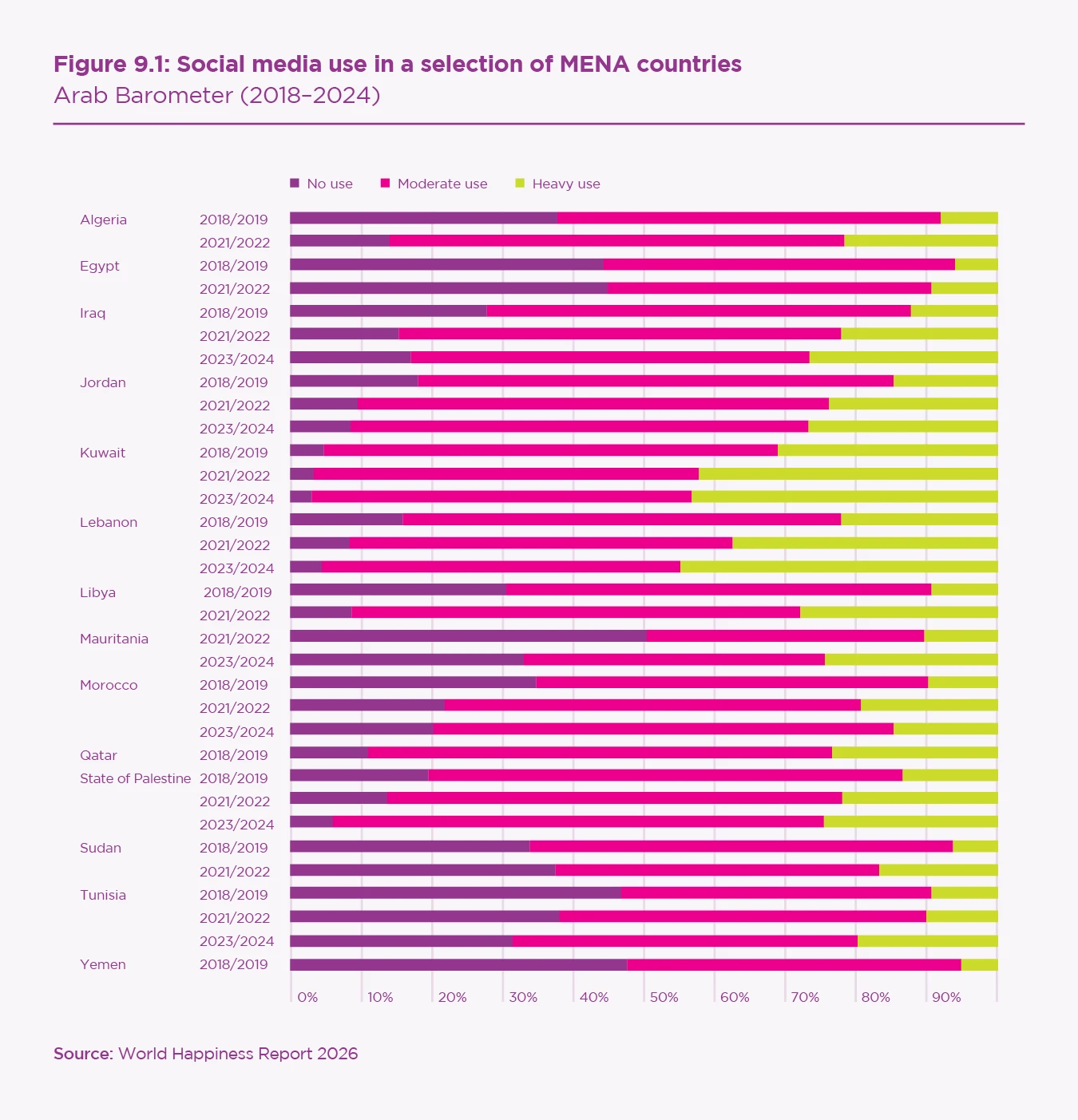
In the remainder of this chapter, we primarily draw on data from the Arab Barometer, which includes the following question on self-reported social media use: “How many hours on a typical day do you spend on social media platforms?” Response categories were: (1) not at all, (2) up to 2 hours, (3) up to 5 hours, (4) up to 10 hours, and (5) 10 hours or more. Throughout the chapter, we distinguish between non-users, moderate users (those reporting up to 2 or up to 5 hours per day), and heavy users (those reporting up to 10 hours or 10 hours or more per day).[5] Consistent with evidence from the Gallup World Poll, the Arab Barometer data shown in Figure 9.1 indicate that social media use is widespread across MENA. In most countries, more than 80% of respondents reported using social media in 2023–2024, a share that has increased over recent years. Heavy use, defined as more than five hours per day, now typically ranges between 20% and 40% of the adult population, varying from around 15% in Morocco to approximately 45% in Lebanon. Overall, the proportion of individuals spending more than five hours per day on social media has risen over time. In countries for which three survey waves are available, we observe a gradual increase in the share of heavy users, with the notable exception of Morocco. Most notably, in Lebanon, the percentage of heavy users went from 22% in 2018–2019 to 45% in 2023–2024, while in Iraq, this figure increased from 12% in 2018–2019 to 27% in 2023–2024.
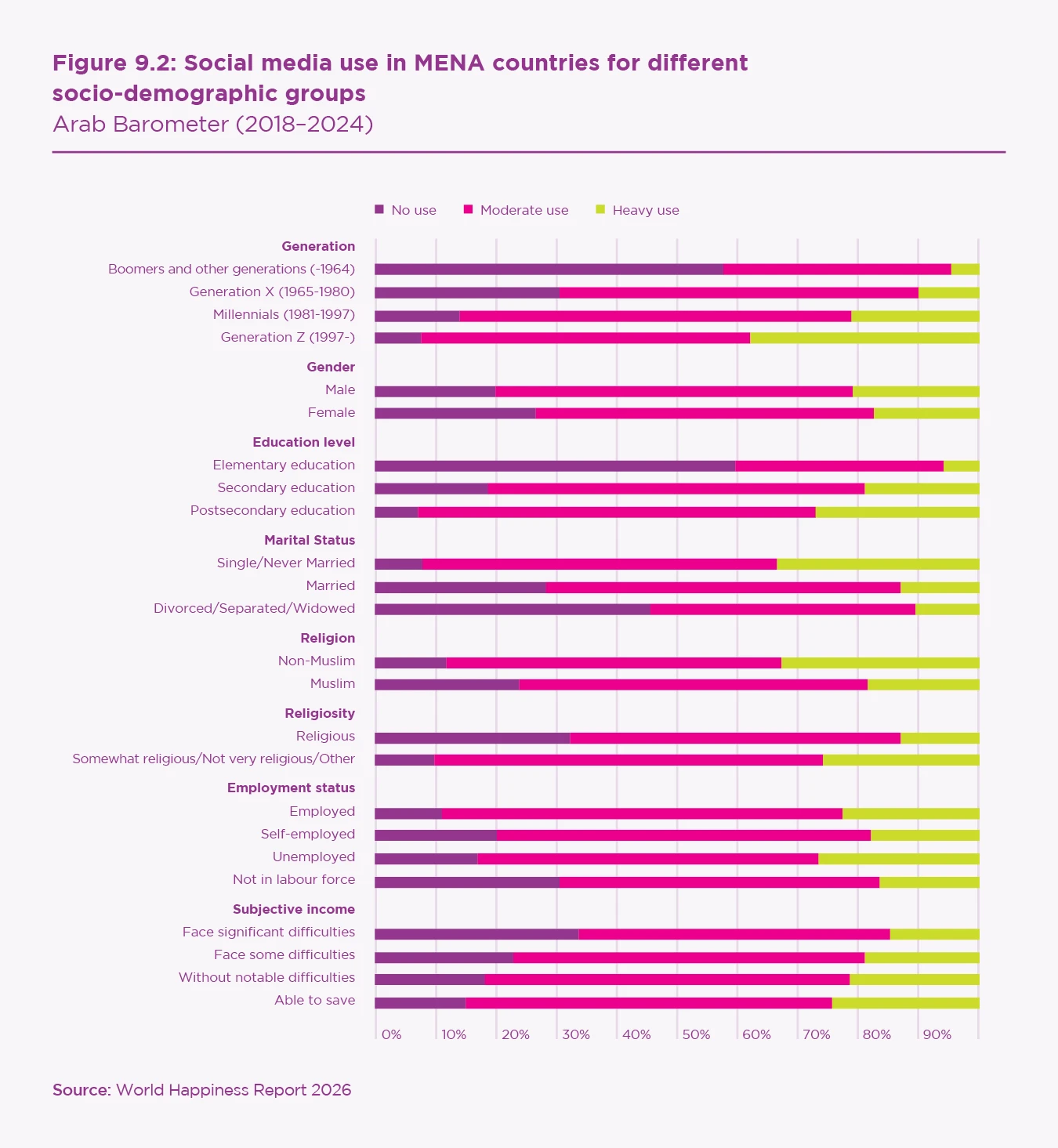
Patterns of social media use vary substantially across social groups within countries (see Figure 9.2). Non-use is particularly common among older generations, with nearly 60% reporting no social media use. Overall, social media use is more prevalent among men (80%) than women (73%), and less common among married individuals (73%) than among those who are single or have never been married (92%). Usage rates are also relatively low among more religious individuals, those with only an elementary education (40%), and people experiencing significant financial difficulties (66%). Heavy social media use (defined as more than five hours per day) is concentrated among younger cohorts. Most notably, 38% of Generation Z (born 1997–2012) report spending more than five hours per day on social media. Heavy use is also more common among non-Muslims (33%) and among individuals who are single or have never been married (34%).
These findings echo the results from the survey on social media use by Borges-Rey and colleagues,[6] based on over 7,300 telephone interviews in seven Arab nations (Egypt, Jordan, Lebanon, Qatar, Saudi Arabia, Tunisia, and the United Arab Emirates), as well as a recent survey of the literature on the MENA region by Abbouyi and colleagues.[7] At the same time, these scholars caution that the literature on heavy or problematic social media use in the MENA region is scarce, emphasising the need for more research in the region.
In the MENA context in particular, gendered norms surrounding online visibility, heightened fear of social disapproval, and lower perceived usefulness of social media may discourage women’s participation.
The lower adoption of social media by women in the MENA region can be partly attributed to region-specific social constraints, alongside mechanisms that operate more broadly across countries.[8] In the MENA context in particular, gendered norms surrounding online visibility, heightened fear of social disapproval, and lower perceived usefulness of social media may discourage women’s participation. Prior research shows that women in several MENA countries face disproportionate risks of online harassment and family surveillance, often embedded in wider systems of social control and reputational concerns.[9] These context-specific risks increase the perceived social costs of social media use and can therefore reduce adoption.
By contrast, the association between marital status and social media use reflects more general mechanisms observed across countries, such as differences in available free time, social networking motivations, and family obligations,[10] even though their relative importance may vary across cultural contexts. Although respondents who consider themselves religious are less likely to use social media, it is worth noting that social media is increasingly being used as a space for religious engagement through influencers.[11] Affluence and education are commonly associated with social media use, reflecting greater access to digital technologies, greater perceived usefulness of social media,[12] and systematic differences in usage patterns (e.g., greater emphasis on informational and educational uses).[13]
Individuals in MENA countries use a variety of social media platforms. Compared to Western nations, older networks remain relevant in a large part of the MENA region, although the use of Facebook has been declining recently.[14] The most widely used platforms in the period 2018–2024 are Facebook (60%) and WhatsApp (51%), followed by YouTube, Instagram, and TikTok (see Figure 9.3). However, there are some regional differences, with X (Twitter) and Snapchat being more widely used in the GCC countries.
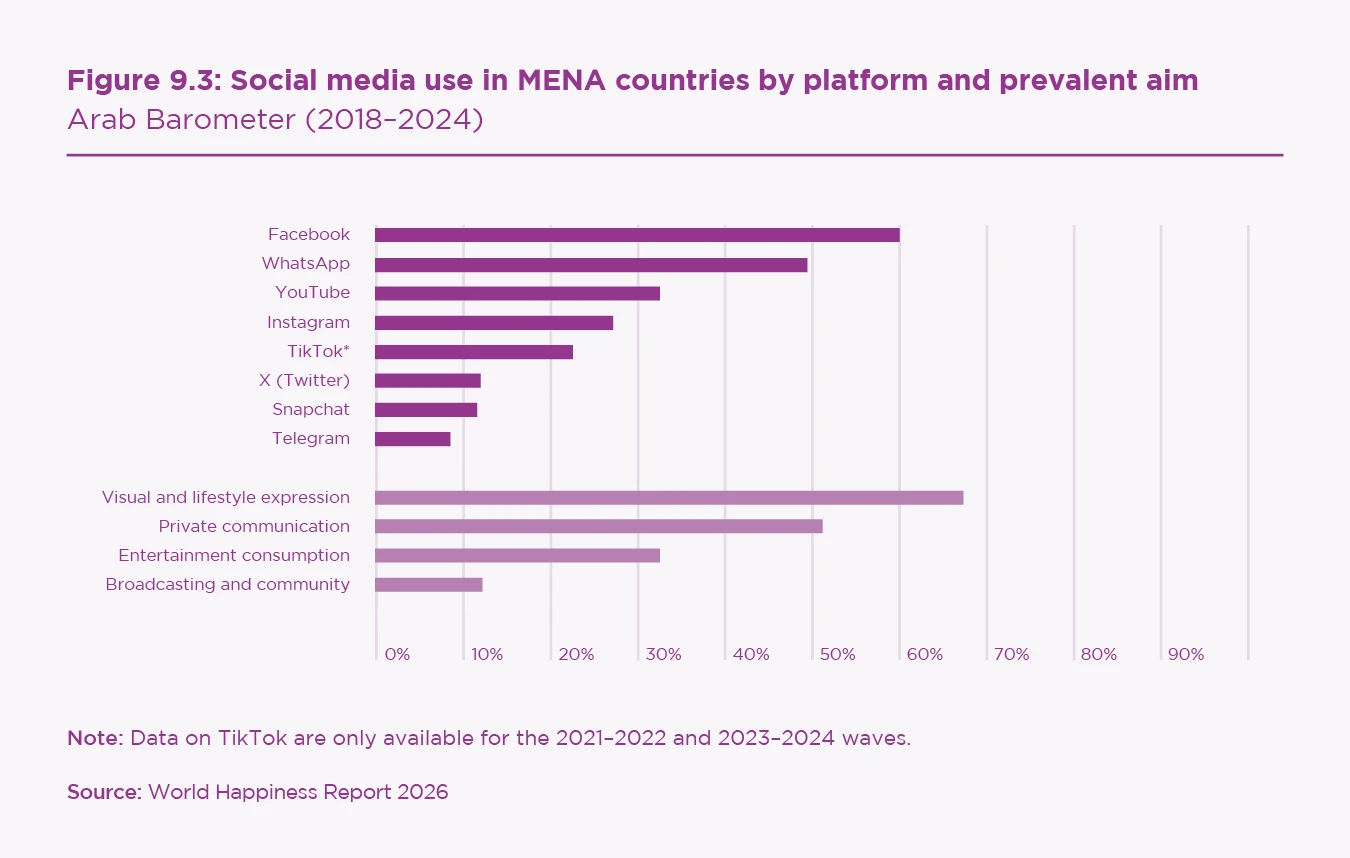
Moreover, different platforms are used for different purposes. As shown in the 2021–2022 survey by Borges-Rey and colleagues, accessing photos and videos is the top activity on Instagram, Facebook, and Snapchat in the MENA region, while WhatsApp is predominantly used for one-to-one and group messaging.[15] X (Twitter) is particularly used for news consumption and sharing, while YouTube primarily serves as a hub for entertainment videos. Figures also show that most platforms are used for a variety of purposes, although one activity often dominates on a given platform. In the remainder of this chapter, we group platforms into the following four categories: (1) visual and lifestyle expression, (2) private communication, (3) public broadcasting and community participation, and (4) entertainment consumption (see Box 9.1). Generally, the use of platforms for visual and lifestyle expression (67%) and private communication (51%) is more widespread in the MENA region than the use of platforms for entertainment consumption (33%) and public broadcasting and community engagement (12%). Direct comparisons with other regions are difficult to make, but worldwide statistics show that Facebook, WhatsApp and Instagram are the most used platforms with around 3 billion users, followed by YouTube (2.5 billion), TikTok (2 billion), Telegram (1 billion), and X (Twitter) (0.6 billion).[16] In this regard, Instagram, TikTok, and YouTube seem relatively less used in the MENA region.
Box 9.1: Data and main variables in the Arab Barometer
Our analysis predominantly draws on survey data from the Arab Barometer. We use three waves: wave 5 (2018–2019), wave 7 (2021–2022), and wave 8 (2023–2024). Unfortunately, not all MENA countries and not all variables are consistently included in the three waves. Below, we discuss the main variables used in the analyses. An overview of the countries included in the analysis is provided in the online appendix.
Social media use: We distinguish three groups of social media users based on their daily usage time: (1) non-users, (2) moderate users, and (3) heavy users. Non-users either do not use the internet at all or report that they do not engage with social media platforms. Moderate users report spending up to five hours per day on social media. Heavy users report spending more than five hours per day on social media platforms. We provide empirical support for this taxonomy in endnote 3 and the analysis below.
Type of social media platforms: We distinguish between various types of social media platforms based on their prevalent use in the MENA region. The classification is based on the survey run by Northwestern University in Qatar in 2021–2022, and distinguishes the following uses: (1) visual and lifestyle expression: Facebook, Instagram, BeReal, TikTok, Snapchat, (2) private communication platforms: WhatsApp, Telegram, Viber, and Signal, (3) public broadcasting and community participation: X (Twitter), Mastodon, Reddit, and Clubhouse, and (4) entertainment consumption: YouTube.
Depressive symptoms are measured based on the question: “Life is overwhelming at times. In the past six months, how often did you feel so depressed that nothing could cheer you up?” Answer categories were (1) never, (2) sometimes, (3) often, and (4) most of the time. This question is only available in the 2018–2019 wave of the Arab Barometer.
Stress is based on the question: “In the past six months, how often did you feel so stressed that everything seemed to be a hassle?” Answer categories were (1) never, (2) sometimes, (3) often, and (4) most of the time. The answers to this question are only available in the 2018–2019 wave of the Arab Barometer.
Life quality compared to one’s own parents is measured by the question: “Do you believe that the quality of your life is better, the same as, or worse than the quality of your parents’ lives?” Answer categories were (1) better, (2) the same, and (3) worse. This question was asked in the 2021–2022 and 2023–2024 waves of the Arab Barometer.
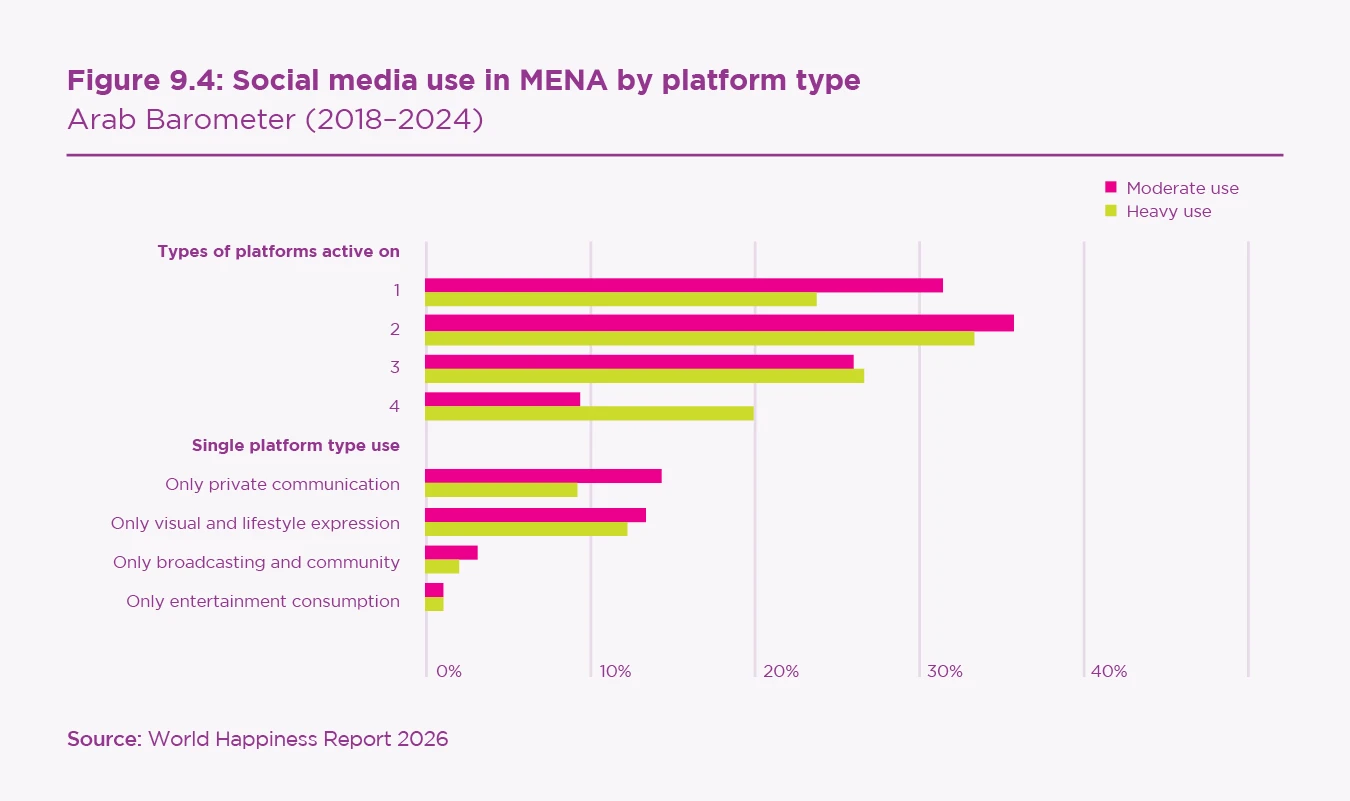
Overall, heavy social media users adopt all types of platforms to a great extent. Compared to moderate users, heavy users are 1.4 times more likely to use social media for private communication, 2.3 times more likely to use social media for visual and lifestyle expression, 1.9 times more likely to use social media for public broadcasting and community engagement, and 1.7 times more likely to use social media for entertainment consumption. Most social media users use multiple types of platforms (see Figure 9.4), but heavy users stand out. Among those who use only one platform, the prevalent aim is either private communication or visual and lifestyle expression.
The various uses of social media, combined with their heavy use, can shape how time spent on social media affects wellbeing in the region. Studies conducted in other world regions have shown that passive use of social media (particularly on visual and lifestyle expression apps) is negatively associated with wellbeing, while active participation benefits wellbeing.[17] Several studies have highlighted that social media can amplify the visibility of alternative lifestyles, giving the impression that others have more enjoyable lives.[18] These social comparisons can, in turn, reduce wellbeing. Online social media use may also enhance wellbeing by increasing access to information and strengthening perceived agency. For instance, by exposing individuals to practical knowledge, opportunities, and coping strategies, social media can reduce uncertainty and increase feelings of control over life circumstances, which are positively associated with wellbeing.
The data also indicate interesting differences between social groups. Most notably, women are 10% more likely to use social media apps for private communication compared to men, despite being less likely to use social media in general. Being religious (versus not or somewhat religious) is associated with the likelihood of using social media in general, except for public broadcasting or community engagement. Although we lack direct evidence, these findings suggest that different groups in MENA countries use social media for distinct purposes.
In the region, social media is gradually overtaking TV as the primary news source, or has already done so.
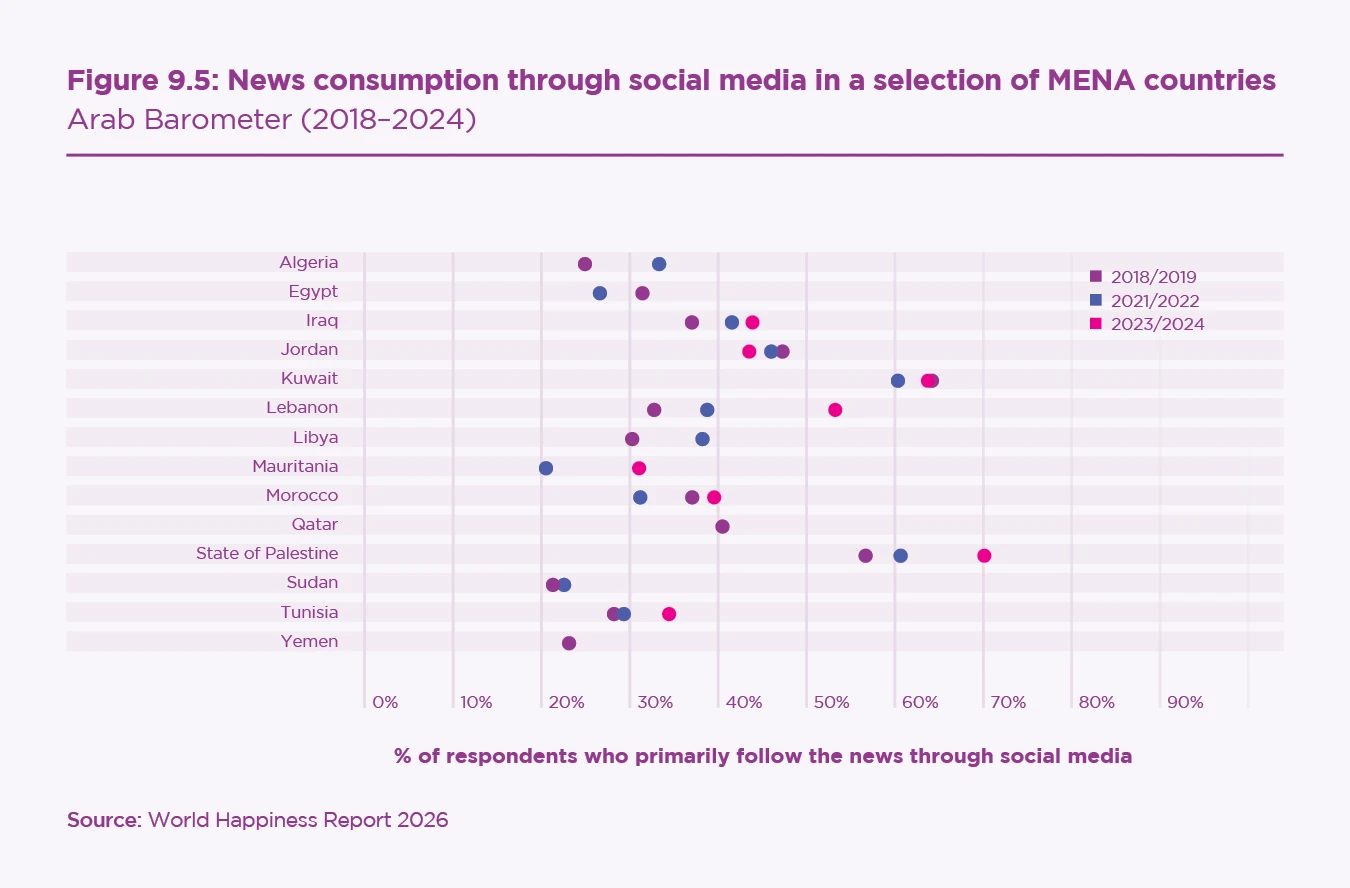
Finally, the Arab Barometer also sheds light on how social media is used and experienced in the MENA region. A large proportion of respondents follow the news through social media, ranging from 35% in Tunisia to 70% in the State of Palestine in the most recent wave (see Figure 9.5). In the region, social media is gradually overtaking TV as the primary news source, or has already done so.[19] In countries like Egypt and Jordan, the share of respondents who use social media as their primary news source is lower than the rest of the MENA region and is stagnating. In contrast, in Lebanon and the State of Palestine, its share is considerably higher and increasing. Perceived trustworthiness of news broadcasting on TV versus news on social media seems to be an important explanatory factor for differences in news consumption; we find that 62% of those who trust social media more than traditional media use it as their primary news source, compared with only 29% of those who do not share this view.
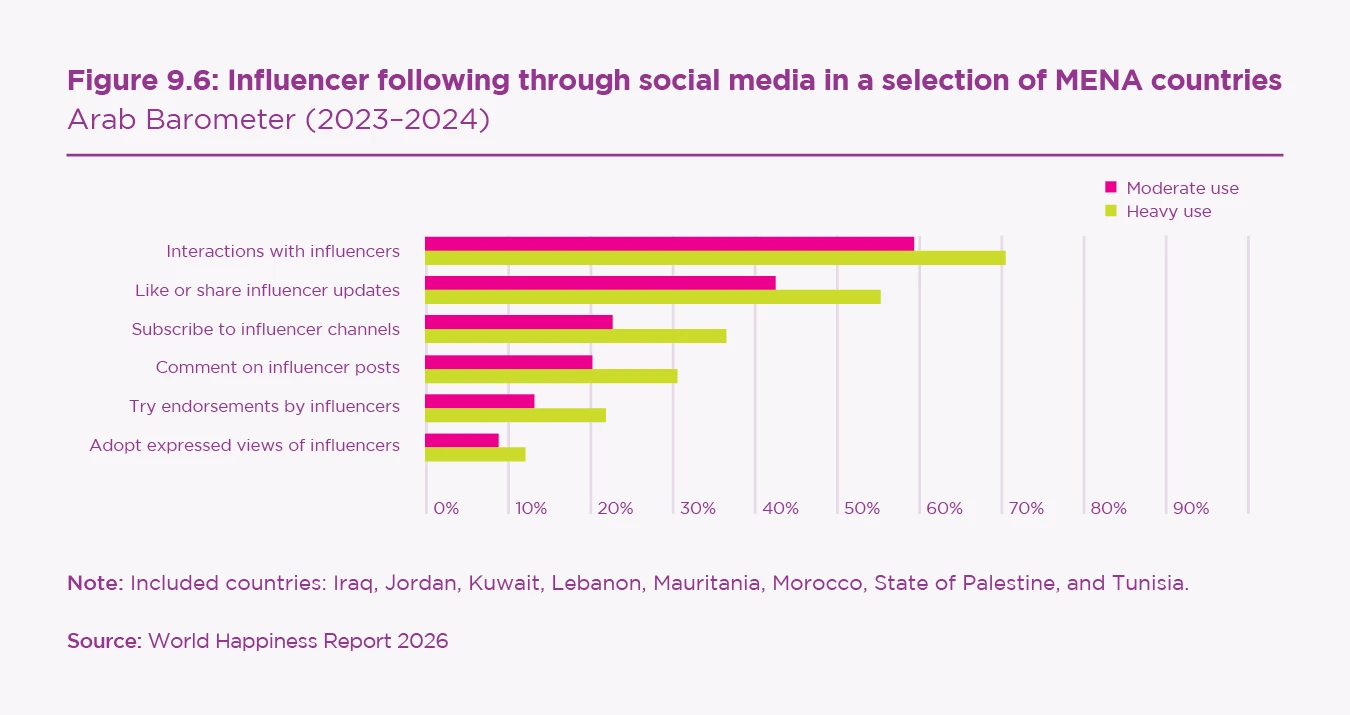
Social media influencers are highly popular in the MENA region. According to the 2023–2024 Arab Barometer, 63% of social media users report having interactions with influencers (see Figure 9.6),[20] where heavy users are more likely to follow influencers than moderate users. The most common topics include sports and recreation (17%), beauty and fashion (16%), arts and culture (14%), food and cooking (12%), and politics and reform (10%). While most users primarily watch or like influencer content, a substantial share engages more actively: of the heavy users, 31% comment or ask questions and 22% report trying products or services recommended by influencers.
Social media use and wellbeing in MENA
Previous studies on the relationship between social media use and wellbeing in the MENA region reached mixed conclusions.[21] Several studies documented a positive relationship between wellbeing and active, relational, and meaningful social media engagement.[22] Other findings from Saudi Arabia,[23] Lebanon,[24] Iran,[25] and Algeria[26] indicate, however, that intense use of platforms such as Instagram, Snapchat, TikTok, and YouTube is associated with lower wellbeing.
In Saudi Arabia, Alwuqaysi and colleagues surveyed 314 adult users (2021–2023), a sample composed predominantly of Saudi (93%), women (75%), and highly educated individuals.[27] They found that social media use is extremely frequent, with 36.6% using social media every couple of hours, 17.5% checking it every hour, and 15% checking it every couple of minutes. Nearly 26% of respondents spend five or more hours a day on social media. However, although the total time is high, sessions are short, with approximately 41.1% spending 15 minutes or less per login. The vast majority perceive their usage as unhealthy, although it is largely driven by the desire to maintain family and social connections. Communication platforms (e.g., WhatsApp, Telegram) are seen positively, while TikTok is viewed as the most harmful. A large share of users report anxiety (69%), addiction (65%), and depressive symptoms (35%) linked to social media use. Additionally, heavy use is consistently associated with poor family functioning in Saudi Arabia.
In Lebanon, Malaeb and colleagues[28] conducted a proportionate, nationally-distributed household survey (n = 466, mean age ≈ 27, 62% female), finding that adults reported an average of 6.2 hours per day on social media. Nearly a quarter (23.7%) met criteria for problematic social media use, defined as an addiction-like pattern of social media engagement characterised by loss of control and continued use despite negative consequences. Problematic use was significantly associated with higher depression, anxiety, and insomnia, while stress did not show a direct association with problematic use.
Moreover, Zeeni and colleagues investigated the relationship between body-image dissatisfaction and eating-disorder risk with social media use in a sample of Lebanese university students (n = 244, 16–21 years, 64% female).[29] Results indicate that higher body image dissatisfaction, greater eating-disorder risk, and lower self-control are associated with greater social media use, pointing to reduced self-regulatory capacity as a potential vulnerability channel. In a parallel sample of Lebanese adults (n = 466), Barbar et al. found that anxiety and social phobia correlate with higher problematic social media use, while emotional intelligence partially mediates the association between alexithymia – a personality trait characterised by difficulty in identifying, describing, and distinguishing one’s own emotions that leads individuals to focus on external events rather than internal feelings – and problematic use, again highlighting emotion-regulation as a protective/risk factor.[30]
Finally, in Iran, Akbari and colleagues showed across two large online cohorts (adolescents n = 562, adults n = 745) that exercise addiction, prevalent in a minority (2.7–4.4%), mediates the links between problematic social media use and psychological distress, insomnia, body-image concern, and compulsive eating.[31] This research suggests that visual comparison cultures (e.g., ‘fitspiration’) can channel digital pressures into compulsive offline behaviours.
Heavy and/or problematic social media use is consistently related to poor wellbeing and mental health.
These studies converge on two aspects. First, heavy and/or problematic social media use is consistently related to poor wellbeing and mental health (including depression, anxiety, and sleep disturbance) in both Gulf and Levant (Eastern Mediterranean) contexts. Second, the degree of harm depends on who is using social media and how they are using it. Demographic gradients (such as women and younger adults) and psychosocial capacities (including self-control and emotional intelligence) shape outcomes, while behavioural conduits like exercise addiction can translate online comparison into offline strain. This pattern helps reconcile the mixed findings of previous studies. When self-regulation is stronger and engagement is more relational (e.g., messaging that supports family cohesion), risks appear more muted. Where visual comparison and dysregulation dominate, harms are larger, particularly for young women in settings with strong body-norm pressures.
The evidence also reveals differences between platforms. WhatsApp is generally viewed positively and associated with maintaining family connections and intellectual engagement.[32] In contrast, visual and short-form platforms, such as TikTok, Instagram, Snapchat, and YouTube, are linked to negative outcomes, including body dissatisfaction, lower self-esteem, and family conflict.[33] Facebook showed mixed results: studies reported benefits for social capital and happiness in the case of active use[34] and increased depression, anxiety, and academic distraction in the case of passive or excessive use.[35] X (Twitter), while widely used among Saudi youth,[36] has less clear evidence of platform-specific outcomes, although some associations with increased depressive symptoms have been reported. This suggests that while the weight of evidence points to harms, the impacts are neither universal nor inevitable, depending on patterns of platform use and contextual factors.
However, it is worth cautioning that most studies on the MENA region use convenience samples, which are not necessarily representative of the overall population. In the following sections, we will examine the relationship between social media use and wellbeing in the MENA region, utilising representative data from the Arab Barometer.
Hours of social media use and wellbeing
We start by exploring how hours of social media use is related to wellbeing, where we distinguish between no use, moderate use, and heavy use (see Box 9.1). Figure 9.7 uses SHAP (SHapley Additive exPlanations) dependence plots to illustrate the relationship between the time spent using social media and the three measures of wellbeing.[37] SHAP values represent the marginal contribution of the hours spent using social media to predict each outcome. Positive SHAP values indicate that more time spent on social media correlates with higher predicted stress, more depressive symptoms, and lower life quality compared to parents.[38]
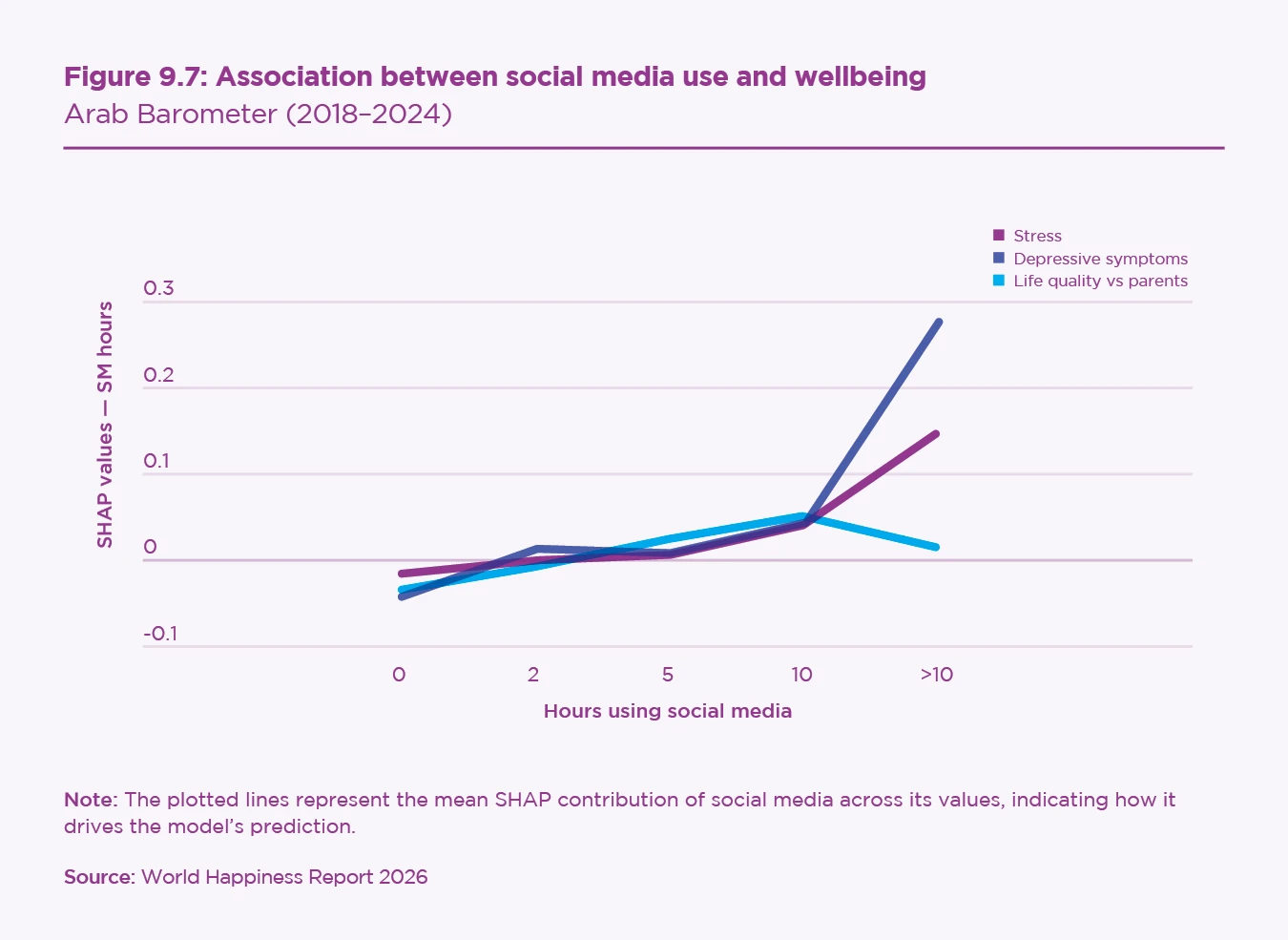
The plots indicate that the association varies across different levels of use. Across all three outcomes (stress, depressive symptoms, and relative life quality), the SHAP curves remain close to zero at lower use levels, indicating a negligible difference between non-users and moderate users. For life quality in particular, the curve already begins to trend upwards (thus lower quality of life compared to parents) after approximately three hours of daily use, while noticeable increases in predicted stress and depressive symptoms emerge among users who spend more than five hours on social media per day. In other words, wellbeing differences are modest at low and moderate exposure, but substantial declines in wellbeing emerge among heavy users. These results support our distinction between moderate and heavy users in the Arab Barometer data and align with the wider empirical literature.[39]
Social media use, stress, and depressive symptoms
In Table 9.1, Panel A shows that 28.1% of non- and moderate users report feeling depressed often or most of the time. However, this share is 34.5% (+6.4 percentage points) among heavy users who use social media for five or more hours daily. Once we account for the potential role of socio-demographic and economic variables, the estimated difference in probable depression is, on average, 7.5 percentage points higher among heavy users compared to others. Although modest, this coefficient indicates a meaningful gap; it is more than twice the difference in depressive symptoms between employed and unemployed individuals. Results also indicate that women tend to report higher levels of depressive symptoms than men, whereas people outside the labour force (such as students, homemakers, or retirees) show slightly lower, but not statistically significant, levels of depressive symptoms compared to employed people. Richer, higher-educated, and religious individuals have a lower propensity to report depressive symptoms.
Panel B provides similar information for stress. The unconditional prevalence of stress among non- and moderate users is 33.8%, increasing to 39.0% among heavy users. This difference increases by 6.6 percentage points once we account for the potential role of socio-demographic and economic variables. This coefficient is comparable in magnitude to that of unemployed respondents compared to employed respondents (+7.3 percentage points). Examining the other control variables, we find that stress is higher among Millennials and unemployed individuals compared to those who are employed. As with depressive symptoms, stress is negatively correlated with education, income, and religiosity. Women report higher stress than men, even after accounting for income, education and other characteristics. Hence, while heavy social media use is associated with high stress, other socio-economic factors, particularly income and employment status, remain strong correlates of stress in the MENA region.
| Panel A: Depressive symptoms | ||
|---|---|---|
| Social media use | % of group reporting feelings of depression often or most of the time | Linear probability model |
| No/moderate | 28.1% | Reference |
| Heavy | 34.5% | 0.075*** |
| R-squared | 0.066 | |
| Observations | 11,776 | 11,776 |
| Panel B: Stress | ||
| Social media use | % of group reporting feelings of stress often or most of the time | Linear probability model |
| No/moderate | 33.8% | Reference |
| Heavy | 39.1% | 0.066*** |
| R-squared | 0.072 | |
| Observations | 11,799 | 11,799 |
Note: The second column reports unconditional descriptive statistics. The third column presents results from linear probability models on the association between heavy social media use and our two variables of interest. Depressive symptoms (2018–2019) is a binary indicator equal to 1 if the respondent felt depressed often or most of the time during the past six months, and 0 otherwise. Stress (2018–2019) is a binary indicator equal to 1 if the respondent felt stressed often or most of the time during the past six months, and 0 otherwise. All regressions control for generation, gender, education, marital status, employment status, income, religiosity, religious denomination (Muslim) and country fixed effects. Significance: * p < 0.10, ** p < 0.05, *** p < 0.01.
Interestingly, we do not find any evidence indicating that the effects of social media use are systematically stronger (or weaker) for particular socio-demographic groups, both in the case of depressive symptoms and stress. The difference in stress and depressive symptoms between heavy and moderate social media users is roughly the same for men and women, for people with higher and lower education, across income groups, and members of various generations. Instead, we find sizable differences across countries, which are captured by country-specific effects. These effects absorb broad contextual factors (institutional, cultural, and economic) that may affect mental health in ways not fully captured by our list of control variables.
Social media use and life quality compared to parents
Do people believe that the quality of their life is better or worse than the quality of their parents’ lives? Table 9.2 shows that heavy social media users have a higher probability (36.1%) of reporting they are worse off compared to their parents than non- and moderate users (31.6%). However, this difference becomes smaller when controlling for socio-demographic and economic factors in the linear probability model. Holding other variables constant, heavy users have a 2.2 percentage point higher probability of feeling worse off compared to their parents than non- and moderate users. The effect size is not particularly large in this case. In fact, it corresponds to nearly half the effect of being unemployed and about one-fifth of the effect of belonging to the second-poorest income group. The other variables attract coefficients that are consistent with the findings for stress and depressive symptoms. The probability of reporting being worse off decreases with higher levels of education and income; it is higher among the unemployed (+4 percentage points compared to the employed) and lower among respondents not in the labour force (−4.2 percentage points compared to the employed). Higher levels of religiosity also predict a lower probability of feeling worse off. Similar to our findings for stress and depressive symptoms, the effect of heavy social media use appears to remain relatively unchanged for individuals across different socio-demographic and economic conditions.
| Social media use | % of group reporting they are worse off than their parents | Linear probability model |
|---|---|---|
| No/moderate | 31.6% | Reference |
| Heavy | 36.1% | 0.022** |
| R-squared | 0.097 | |
| Observations | 23,132 | 23,132 |
Note: The second column reports unconditional descriptive statistics. The third column presents results from linear probability models on the association between heavy social media use and our variable of interest. Life quality vs. parents (2021–2022 and 2023–2024) is a binary indicator equal to 1 if the respondent reports having a worse quality of life than their parents. All regressions control for generation, gender, education, marital status, employment status, income, religiosity, religious denomination (Muslim), country fixed effects, and wave fixed effects. Significance: * p < 0.10, ** p < 0.05, *** p < 0.01.
Overall, the findings suggest that intense engagement with social media is moderately associated with how individuals evaluate their own lives relative to those of their parents, in addition to its association with stress and depressive symptoms. One way to explain this pattern is that heavy social media use reshapes the benchmarks used for intergenerational comparison. Progress was traditionally assessed using age-related milestones such as marriage, stable employment, or home ownership,[40] but social media use directs attention toward more immediate and symbolic indicators of success, including luxury consumption, career mobility, and online visibility.[41] Social media content is selectively positive and highly visible, so it raises comparison standards and encourages upward comparisons that are weakly connected to long-term security or life-course progression.[42] As a result, heavy users may be more likely to perceive themselves as worse off than their parents in terms of stability and material security, while simultaneously feeling pressure to outperform them in lifestyle or social recognition. This dynamic can produce ambivalence in intergenerational self-evaluations, whereby subjective assessments of one’s quality of life fall below those of the parental generation.
In rapidly changing societies, early signs of progress among some groups can generate widespread optimism. However, when expectations of shared advancement remain unfulfilled, this optimism may give way to frustration or protest.
This dynamic is likely to be particularly pronounced in contexts characterised by rapid social change and constrained mobility. In the Arab context, research on youth mobility shows that younger generations are much better educated and more digitally connected than their parents, but face limited job opportunities and weaker prospects for upward mobility in several MENA countries.[43] This pattern resonates with the ‘tunnel effect’ described by Hirschman and Rothschild,[44] which suggests that, in rapidly changing societies, early signs of progress among some groups can generate widespread optimism. However, when expectations of shared advancement remain unfulfilled, this optimism may give way to frustration or protest.[45] The digital sphere reproduces this dynamic at scale by exposing young people in the MENA region to selective success stories across the globe that raise hope and aspirations, but often result in disappointment when comparable progress proves out of reach. In this regard, feeling worse off than one’s parents may reflect not only economic realities but also repeated exposure to idealised and often unreachable lifestyles.
How does the relationship change by social media type?
As well as providing information on how much time people spend on social media, the Arab Barometer allows us to distinguish between the kinds of social media used. We consider four broad types of social media platforms: (1) visual and lifestyle expression, (2) private communication, (3) public broadcasting and community participation, and (4) entertainment consumption. These are not mutually exclusive, so individuals can belong to several groups (see Box 9.1 for definitions).
This typology allows us to analyse the relationships between the amount of time spent on each type of social media with stress, depressive symptoms, and life quality compared to parents. Unfortunately, the Arab Barometer does not report the time spent on each platform separately from the others, although in reality, people often use social media for a variety of purposes. To address this issue, we used information from Figures 9.4 and 9.5 to study the effect of heavy use for: (1) respondents active on only one or two platforms, (2) respondents active on three platforms, (3) respondents active on four types of platforms, (4) respondents who exclusively use social media apps for private communication, (5) respondents who solely use visual and lifestyle expression apps, and (6) respondents who use social media as their primary news source. In Figure 9.8, we compare heavy users in a specific category to all moderate and non-users.
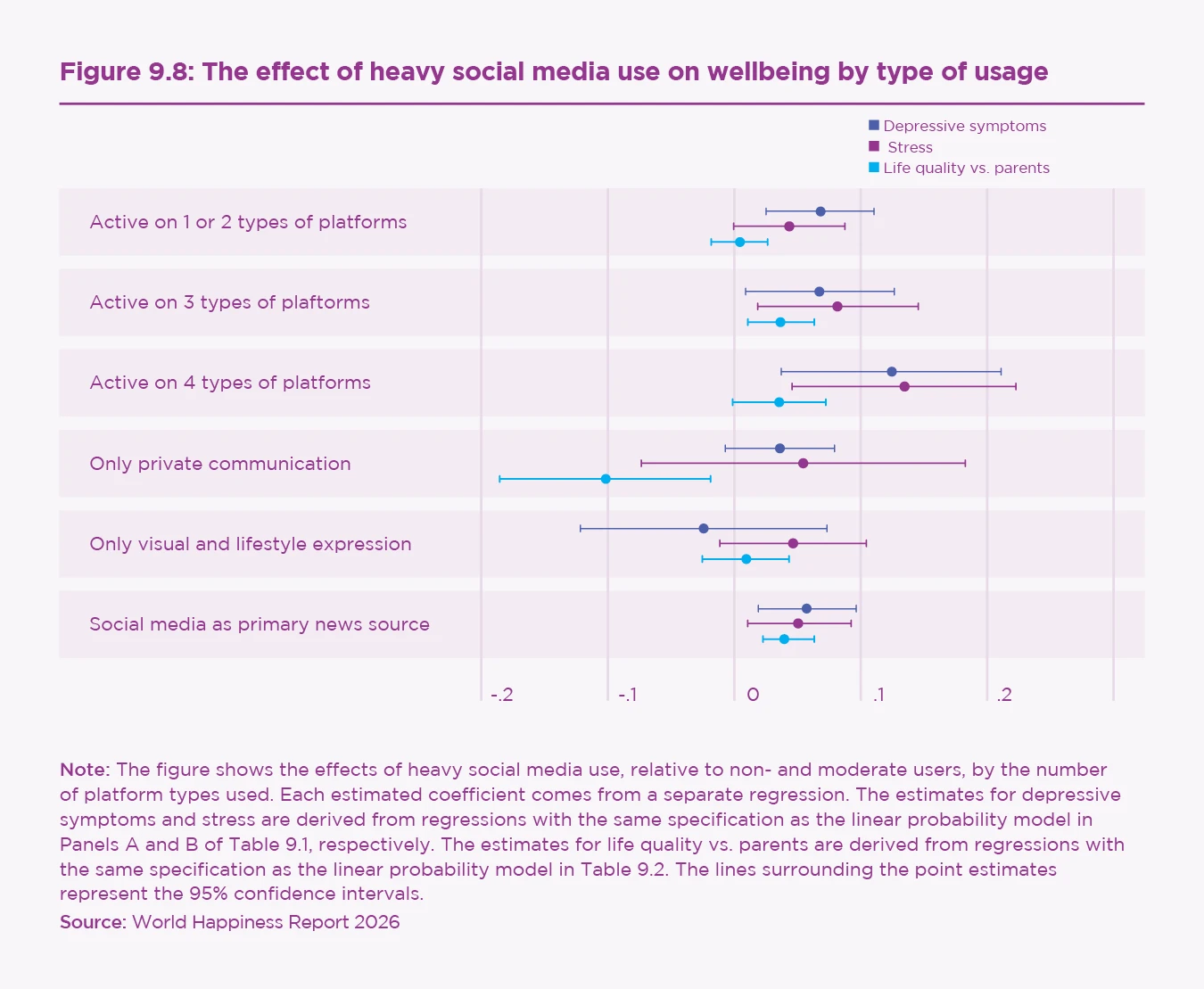
Two key insights emerge from these analyses. First, heavy users who are active on more types of platforms have a higher probability of reporting lower wellbeing. This suggests that part of the negative effect of heavy use may stem from information, communication, and social overload,[46] which could help explain the adverse link between intensive social media use and wellbeing. Second, there is no clear evidence that any single platform type drives the negative association between heavy use and wellbeing. However, heavy users who primarily use social media for private communication evaluate their own lives relative to their parents’ lives considerably more favourably. Unfortunately, we are not able to discern how much time is spent on each type of platform. Reliance on social media as the main source of news is significantly associated with lower levels of wellbeing across all three outcome measures.
Social media exposure to influencers and the relation to quality of life compared to one’s parents
Across studies in Lebanon and Saudi Arabia, engagement with influencers and appearance-focused, visually-oriented content, particularly on Instagram and TikTok, is consistently associated with poorer mental health and diminished wellbeing, including higher depression, emotional overeating, disordered eating symptoms, and greater psychological distress.[47] While body image concerns feature prominently, these findings point to a broader pattern in which platforms emphasising idealised self-presentation heighten young people’s vulnerability to negative self-appraisal. Social comparison processes underpin these outcomes: repeated exposure to curated, filtered portrayals reinforces unfavourable evaluations of one’s own abilities, appearance, and life situation, thereby reducing subjective wellbeing.[48]
The data on quality of life compared to one’s own parents allows us to distinguish between respondents who follow influencers on social media and those who do not,[49] and to examine how this interacts with heavy social media use. The results reported in the second column of Table 9.3 show that following influencers is not significantly associated with feeling better or worse off than one’s parents among moderate social media users. However, this changes when influencer content is combined with very intensive use. Heavy users are significantly more likely to say that they are worse off than their parents if they follow influencers. In a linear probability framework, the interaction between heavy use and following influencers is positive and statistically significant, indicating that the combination of high exposure and influencer content increases the probability of feeling worse off across generations (+6 percentage points), compared with similar heavy users who do not follow influencers. In other words, it is not influencers specifically, but heavy engagement with influencers’ feeds that is associated with a more pessimistic view of life compared to one’s own parents.
| Linear regression | ||
|---|---|---|
| No/moderate use | Reference | |
| Heavy use | −0.013 | |
| Interactions with influencers | −0.012 | |
| Heavy use X Interactions with influencers | 0.060** | |
| R-squared | 0.110 | |
| Observations | 12,604 | |
Note: Life quality vs. parents (2023–2024) is a binary indicator equal to 1 if the respondent reports having a worse quality of life than their parents. All regressions control for generation, gender, education, marital status, employment status, income, religiosity, religious denomination (Muslim), and country fixed effects. Significance: * p < 0.10, ** p < 0.05, *** p < 0.01.
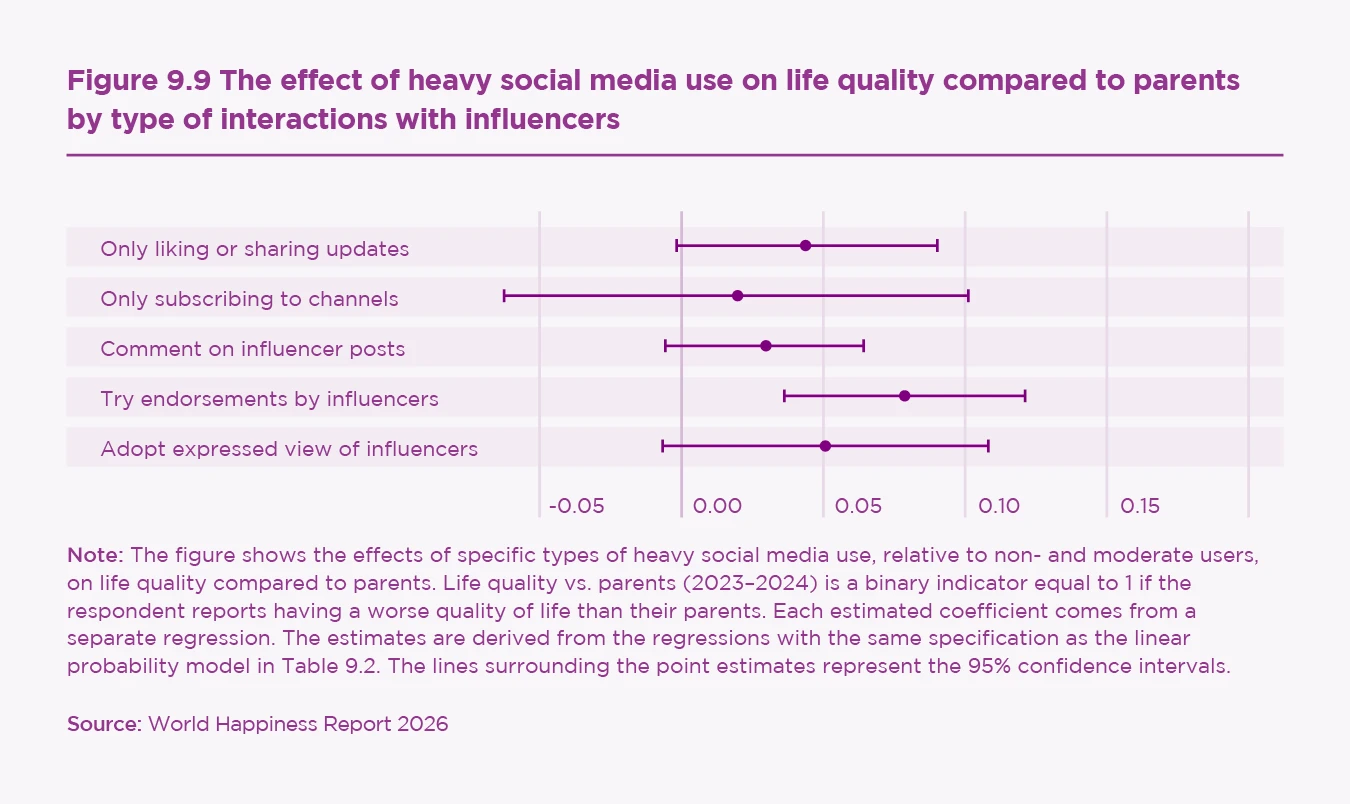
Interestingly, the Arab Barometer allows us to delve further into the relationship between influencers’ feeds and social media use by highlighting various possible forms of interactions with influencers. Figure 9.9 illustrates the impact of heavy social media use on life quality compared to that of parents through five different forms of interaction with influencers: only liking or sharing updates; only subscribing to channels; commenting on posts; trying endorsements by influencers; and adopting influencers’ views. We distinguish ‘only liking or sharing’ and ‘only subscribing’ because users who engage in more intensive interactions (commenting, trying endorsements, adopting views) often also perform these baseline actions, making the ‘only’ categories useful for isolating minimal engagement. Heavy social media users have an 8 percentage point higher probability of feeling worse off than their parents when they try endorsements. Other forms of interaction are not or weakly statistically significant. It is unsurprising that trying endorsements, which are instrumental and promotional interactions, show the strongest relation to a higher probability of feeling worse off, given that they comprise the predominant form of social comparison.
Conclusion
The analyses presented in this chapter provide a nuanced picture of social media use and wellbeing in the Middle East and North Africa, a world region that has received comparatively less attention so far. While the MENA region is often characterised by its high digital engagement and rapid adoption of new platforms, our findings show that the implications of social media use for wellbeing are neither uniform nor straightforward.
A first insight is that the relationship between social media use and wellbeing is nonlinear. For the majority of users, those who spend up to five hours per day online, the association between social media use and stress, depressive symptoms, and life quality compared to their parents is negligible. It is only beyond the threshold of five hours – which we define as heavy use – that we observe consistent wellbeing losses. Compared to others, heavy users report significantly higher levels of stress and depressive symptoms, as well as a greater likelihood of feeling worse off than their parents. These patterns hold across countries and demographic groups.
The coefficients of heavy social media use on depressive symptoms and stress are comparable in magnitude to those associated with unemployment, low income and education levels.
Besides heavy social media use, other strong correlates of wellbeing include traditional socio-economic factors such as religiosity, income, employment status, and education. The coefficients of heavy social media use on depressive symptoms and stress are comparable in magnitude to those associated with unemployment, low income and education levels. Although some socio-demographic groups use social media more than others, we did not find evidence indicating that heavy social media use affects particular groups systematically more than others. The wellbeing difference between heavy users and non- or moderate users is similar for men and women, richer and poorer, more and less educated, and across generations.
The type of heavy use also matters. Multiple-platform use, following influencers, and relying on social media as a primary news source show the strongest associations with negative wellbeing outcomes. These forms of use are more closely linked to stress, depressive symptoms, and low evaluations of quality of life relative to one’s parents. A likely explanation is that such uses increase cognitive overload and intensify social comparison and public visibility. Unfortunately, the data do not allow us to distinguish directly between passive and active use. Nevertheless, it is plausible and shown in other studies that when social media is primarily[50] used to maintain existing offline social relationships, its effects are largely positive.[51]
In addition, our results show that influencer engagement does not have uniform effects. Simply following influencers is unrelated to feeling worse off than one’s parents. The negative association arises only for heavy users who engage in instrumental or promotional interactions, especially when trying influencers’ endorsements. Subscribing to channels or commenting does appear to harm wellbeing but to a lesser extent. Still, more work is needed to understand how following influencers relates to wellbeing.
Taken together, these findings portray a landscape in which social media neither uniformly harms nor benefits wellbeing. Rather, outcomes depend on the intensity and mode of use, as well as the social environments in which digital life unfolds. In this regard, it can be argued that specific patterns of intensive social media use are associated with wellbeing. Social media is, first and foremost, a technology with the potential both to enhance and to undermine wellbeing, depending on how it is used. Ultimately, this chapter underscores the need to move beyond universal or deterministic narratives about the impact of social media.
The Arab world has received relatively limited attention from social media and wellbeing researchers but this chapter demonstrates that many patterns identified in Western contexts also emerge in the MENA region. At the same time, it is important to recognise that some distinct dynamics are at play, including the roles of gender in shaping social media use,[52] as well as the influence of religion,[53] cultural norms,[54] and online government surveillance.[55] These region-specific patterns have only been addressed to a limited extent in this chapter and warrant closer and more systematic attention in future research.
References
Abbouyi, S., Bouazza, S., El Kinany, S., El Rhazi, K., & Zarrouq, B. (2024). Depression and anxiety and its association with problematic social media use in the MENA region: A systematic review. The Egyptian Journal of Neurology, Psychiatry and Neurosurgery, 60(1), 15. https://doi.org/10.1186/s41983-024-00793-0
Abiddine, F.Z.E., Aljaberi, M. A., Gadelrab, H. F., Lin, C. Y., & Muhammed, A. (2022). Mediated effects of insomnia in the association between problematic social media use and subjective well-being among university students during COVID-19 pandemic. Sleep Epidemiology, 2, 100030. https://doi.org/10.1016/j.sleepe.2022.100030
Akbari, M., Seydavi, M., Zamani, E., & Griffiths, M. D. (2022). The risk of exercise addiction mediates the relationship between social media use and mental health indices among young Iranians. Addiction Research & Theory, 32(1), 27–37. https://doi.org/10.1080/16066359.2022.2149742
Al-Ansi, A. M., Hazaimeh, M., Hendi, A., Al-hrinat, J., & Adwan, G. (2023). How do social media influencers change adolescents’ behavior? An evidence from Middle East Countries. Heliyon, 9(5), e15983. https://doi.org/10.1016/j.heliyon.2023.e15983
Al-Boinin, H., Vatanasakdakul, S., & Zaghouani, W. (2025). Gender, Culture, and Social Media: Exploring Women’s Adoption of Social Media Entrepreneurship in Qatari Society. Administrative Sciences, 15(3), 89. https://doi.org/10.3390/admsci15030089
Alateeq, D., Alhadi, A., Alateeq, F., Alsubie, A., AlEesa, D., AlShareef, S., & Omair, A. (2016). Psychological Well-being Among Social Network Users of King Saud University Students. European Psychiatry, 33(S1), S446–S446. https://doi.org/10.1016/j.eurpsy.2016.01.1622
Albeladi, N., & Palmer, E. (2020). The Role of Parental Mediation in the Relationship between Adolescents’ Use of Social Media and Family Relationships in Saudi Arabia. Journal of Information Technology Management, 12(2), 163–183. https://doi.org/10.22059/jitm.2020.75799
AlHamad, N. S., & Al Amri’, K. (2021). The association between social media use and depressive symptoms among adults in Riyadh, Saudi Arabia. Journal of Family Medicine and Primary Care, 10(9), 3336–3342. https://doi.org/10.4103/jfmpc.jfmpc_697_21
Almulla, M. (2020). Social media use for educational purposes: Systematic Literature Review in higher education of Middle East Countries (MEC). International Journal of Advanced Trends in Computer Science and Engineering, 9(2), 1935–1944. https://doi.org/10.30534/ijatcse/2020/159922020
Alshaikhi, O. A. M., Alshaikhi, S. A., AlZubaidi, H. A. A., Alzubaidi, M. A. A., Alfaqih, H. M. H., Alrezqi, A. A. A., AlRashdi, M. H. S., Alzubaidi, A. A. A., Alshaikhi, M. A. M., Ghazy, R. M., & Alshaikh, A. A. (2023). Social Media Effect on Personal Self-Esteem Among the Population in Saudi Arabia. Cureus, 15(11), e49543. https://doi.org/10.7759/cureus.49543
Alshammari, M. M., Al-Mamary, Y. H., & Abubakar, A. A. (2024). Revolutionizing education: Unleashing the power of social media in Saudi Arabian public universities. Humanities and Social Sciences Communications, 11(1), 808. https://doi.org/10.1057/s41599-024-03313-w
Alwuqaysi, B., Abdul-Rahman, A., & Borgo, R. (2024). The Impact of Social Media Use on Mental Health and Family Functioning Within Web-Based Communities in Saudi Arabia: Ethnographic Correlational Study. Journal of Medical Internet Research Formative Research, 8, e44923. https://doi.org/10.2196/44923
Alzahrani, M. S. J., Morsi, N. M. A., & Sharif, L. S. (2024). The Relationship between Social Media Use and Depression among Nursing Students at Governmental University. Evidence-Based Nursing Research, 3(2), 1–10. https://doi.org/10.47104/ebnrojs3.v3i2.189
Alzahuf, S., Ahmed, E., Al-Badwyi, J. A., Alkhalifa, M. A., Albinessa, M. A., Bashandi, Abdulelah A., Alanazi, D. M., Alawad, F. H., & Alhodibi, M. (2024). Influence of Social Media on Body Image and Eating Disorder Prevalence in Adolescents: A Cross-sectional Saudi Study. Journal of Advanced Trends in Medical Research, 1(2), 593–598. https://doi.org/10.4103/ATMR.ATMR_104_24
Ansari, S., Iqbal, N., Asif, R., Hashim, M., Farooqi, S. R., & Alimoradi, Z. (2024). Social media use and Well-Being: A systematic review and Meta-Analysis. Cyberpsychology, Behavior, and Social Networking, 27(10), 704–719. https://doi.org/10.1089/cyber.2024.0001
Appel, H., Gerlach, A. L., & Crusius, J. (2016). The interplay between Facebook use, social comparison, envy, and depression. Current Opinion in Psychology, 9, 44–49. https://doi.org/10.1016/j.copsyc.2015.10.006
Arampatzi, E., Burger, M. J., & Novik, N. (2018a). Social network sites, individual social capital and happiness. Journal of Happiness Studies, 19(1), 99–122. https://doi.org/10.1007/s10902-016-9808-z
Arampatzi, E., Burger, M., Ianchovichina, E., Röhricht, T., & Veenhoven, R. (2018b). Unhappy development: Dissatisfaction with life on the eve of the Arab Spring. Review of Income and Wealth, 64, S80–S113. https://doi.org/10.1111/roiw.12388
Bali, O. A., Omer, E., Abdulridha, K., Ahmad, A. R. (2021). Psychological Violence Against Arab Women in the Context of Social Media: Web-Based Questionnaire Study. Journal of Medical Internet Research, 23(8), e27944. https://doi.org/10.2196/27944
Barbar, S., Haddad, C., Sacre, H., Dagher, D., Akel, M., Kheir, N., Salameh, P., Hallit, S., & Obeid, S. (2021). Factors associated with problematic social media use among a sample of Lebanese adults: The mediating role of emotional intelligence. Perspectives in Psychiatric Care, 57(3), 1313–1322. https://doi.org/10.1111/ppc.12692
Batool, S., Younas, D., Sajjad, M., Riaz, S., Jaffri, A. Z., & Mir, T. M. (2025). Social Media Problematic Use and Depression: A Quantitative Study of Pakistani Adults. Journal of Asian Development Studies, 14(1), 519–523. https://doi.org/10.62345/jads.2025.14.1.40
Borges-Rey, E., Jin, V., Khalid, J., Al Manaa, M., & Khamis, I. (2022). Media use in the Middle East, 2021-2022: A seven-nation survey. Northwestern University in Qatar. Retrieved from www.mideastmedia.org/survey/2022
Burger, M. J., & Arampatzi, E. (2025). Vision 2030 and subjective well-being in Saudi Arabia. Sustainability, 17(15), 6856. https://doi.org/10.3390/su17156856
Chegeni, M., Nakhaee, N., Shahrbabaki, M. E., Mangolian Shahrbabaki, P., Javadi, S., & Haghdoost, A. (2022). Prevalence and motives of social media use among the Iranian population. Journal of Environmental and Public Health, 2022(1), 1490227. https://doi.org/10.1155/2022/1490227
Dixon, S. J. (2025). Most popular social networks worldwide as of February 2025, by number of monthly active users. Statista. March, 26. https://www.statista.com/statistics/272014/global-social-networks-ranked-by-number-of-users/?srsltid=AfmBOopxgpEklLi_c__VGALd7acSIV5PL_MJt0XffM1PTzUA3VUQ51B6
Driouchi, A., & Harkat, T. (2017). An Empirical Descriptive Analysis of the Factors underlying the Role of Younger Generations in Economic, Social & Political Changes in Arab Countries. MPRA Paper 77216, University Library of Munich, Germany. https://mpra.ub.uni-muenchen.de/77216/1/MPRA_paper_77216.pdf
El Hayek, S., Obeid, S., Kazan, R., Hallit, S., Fekih-Romdhane, F., & Haddad, G. (2025). Mediating effect of depression between problematic social media use and body dysmorphic concerns in adolescents. Discover Mental Health, 5(1), 47. https://doi.org/10.1007/s44192-025-00176-8
Elsayed, H. A. E., Al-Talip, R., Alshamrani, S., Abaood, G., Saran, S., & Alduhaym, L. (2023). The relationship between an influence of social media celebrities and body image estimation among teenage girls in Riyadh. Arab Journal of Measurement and Evaluation, 4(8), 1–27. https://www.semanticscholar.org/paper/The-Relationship-between-an-Influence-of-Social-and-Elsayed-Al-Talip/66d27bfc3e375cefb75b8c9805685bc471d2dc63
Faqihi, F. A., Qutob, R. A., Subh, R. H. M., Aljathalin, L. A. M., Alshalan, L. Z., Yati, S. M. A., Alaryni, A., Alghamdi, A., Alsolamy, E., Bukhari, A., Alanazi, A., Hazazi, B. H. A., Abuhemid, H. A., Alassaf, R. A., & Alzahrani, S. S. M. (2024). Examining the Effects of Social Media on Mental Health Among Adolescents in Saudi Arabia. Cureus, 16(1), e53261. https://doi.org/10.7759/cureus.53261
Farhat, F. (2016). The Relationship between Facebook Use, Envy, Wellbeing, and Loneliness among Lebanese College Students (SBS thesis, Haigazian University). https://doi.org/10.62811/th.0158
Farooq, A., Salminen, J., Martin, J. D., Aldous, K., Jung, S. G., & Jansen, B. J. (2024). Exploring social media privacy concerns: a comprehensive survey study across 16 Middle Eastern and North African countries. IEEE Access, 12, 147087–147105. https://ieeexplore.ieee.org/document/10684181
Ghai, S., Magis-Weinberg, L., Stoilova, M., Livingstone, S., & Orben, A. (2022). Social media and adolescent well-being in the Global South. Current Opinion in Psychology, 46, 101318.https://doi.org/10.1016/j.copsyc.2022.101318
Hatamleh, I. H., Safori, A. O., & Ahmad, A. K. (2023). Exploring the Interplay of Cultural Restraint: The Relationship between Social Media Motivation and Subjective Happiness. Social Sciences, 12(4), 228. https://doi.org/10.3390/socsci12040228
Hirschman, A. O., & Rothschild, M. (1973). The Changing Tolerance for Income Inequality in the Course of Economic Development. The Quarterly Journal of Economics, 87(4), 544–566. https://doi.org/10.2307/1882024
Jensen Arnett, J. (2017). Life stage concepts across history and cultures: Proposal for a new field on indigenous life stages. Human Development, 59(5), 290–316. https://doi.org/10.1159/000453627
Karam, J. M., Bouteen, C., Mahmoud, Y., Tur, J. A., & Bouzas, C. (2023). The Relationship between Social Media Use and Body Image in Lebanese University Students. Nutrients, 15(18), 3961. https://doi.org/10.3390/nu15183961
Khodabakhsh, S., & Ahmadi, S. (2020). The relationship between subjective happiness and social media usage during the COVID-19 pandemic: the moderating role of resilience. Aloma: revista de psicologia, ciències de l’educació i de l’esport Blanquerna, 38(2), 105–112. https://www.researchgate.net/publication/349455712_The_relationship_between_subjective_happiness_and_social_media_usage_during_the_COVID-19_pandemic_the_moderating_role_of_resilience
Krasnova, H., Wenninger, H., Widjaja, T., & Buxmann, P. (2013). Envy on Facebook: A Hidden Threat to Users’ Life Satisfaction? Wirtschaftsinformatik Proceedings 2013. 92. https://boris-portal.unibe.ch/server/api/core/bitstreams/d1da93c8-4a7d-46b1-96b7-af6a172c5a73/content
Lambert, L., Lomas, T., van de Weijer, M. P., Passmore, H. A., Joshanloo, M., Harter, J., Ishikawa, Y., Lai, A., Kitagawa, T., Chen, D., Kawakami, T., Miyata, H., & Diener, E. (2020). Towards a greater global understanding of wellbeing: A proposal for a more inclusive measure. International Journal of Wellbeing, 10(2), 1–18. https://doi.org/10.5502/ijw.v10i2.1037
Lopes, L. S., Valentini, J. P., Monteiro, T. H., Costacurta, M. C. D. F., Soares, L. O. N., Telfar-Barnard, L., & Nunes, P. V. (2022). Problematic social media use and its relationship with depression or anxiety: a systematic review. Cyberpsychology, Behavior, and Social Networking, 25(11), 691–702. https://doi.org/10.1089/cyber.2021.0300
Malaeb, D., Salameh, P., Barbar, S., Awad, E., Haddad, C., Hallit, R., Sacre, H., Akel, M., Obeid, S., & Hallit, S. (2021). Problematic social media use and mental health (depression, anxiety, and insomnia) among Lebanese adults: Any mediating effect of stress? Perspectives in Psychiatric Care, 57(2), 539–549. https://doi.org/10.1111/ppc.12576
Matthes, J., Karsay, K., Schmuck, D., & Stevic, A. (2020). “Too much to handle”: Impact of mobile social networking sites on information overload, depressive symptoms, and well-being. Computers in Human Behavior, 105, 106217. https://doi.org/10.1016/j.chb.2019.106217
Nazzal, Z., Rabee, H., Ba’ar, M., & Berte, D. (2021). Virtually alone: excessive Facebook use and mental health risk in Palestine, a cross-sectional study. Palestinian Medical and Pharmaceutical Journal, 6(1), 53–62. https://doi.org/10.59049/2790-0231.1041
Powell, J., & Pring, T. (2024). The impact of social media influencers on health outcomes: Systematic review. Social Science & Medicine, 340, 116472. https://doi.org/10.1016/j.socscimed.2023.116472
Pripoae-Şerbănescu, C., & Maţoi, E. (2023). Social Media in the GCC Countries—Facilitator or Curse for Generation “Z”? In M. M. Rahman & A. Al-Azm (Eds), Social Change in the Gulf Region (Vol. 8, pp. 17–39). Springer Nature Singapore. https://doi.org/10.1007/978-981-19-7796-1_2
Radcliffe, D., Hadil, A., & Nii, M. (2023). Social Media in the Middle East 2022: A Year in Review. Available at SSRN: https://ssrn.com/abstract=4411239
Rossouw, S., & Greyling, T. (2025). Experienced well-being and compliance behaviour: new applications of Quality of Life theories, using AI and real-time data. Applied Research in Quality of Life. https://doi.org/10.1007/s11482-025-10535-w
Smidi, A., & Shahin, S. (2017). Social media and social mobilisation in the Middle East: A survey of research on the Arab Spring. India Quarterly, 73(2), 196–209. https://www.jstor.org/stable/48505308
Strategy& PwC Middle East & Google News Initiative. (2023). Building a vibrant news industry in the Middle East and North Africa. Available from https://www.strategyand.pwc.com/m1/en/strategic-foresight/sector-strategies/media/mena-news-industry.html
Tandoc, E. C., Ferrucci, P., & Duffy, M. (2015). Facebook use, envy, and depression among college students: Is facebooking depressing? Computers in Human Behavior, 43, 139–146. https://doi.org/10.1016/j.chb.2014.10.053
Verduyn, P., Ybarra, O., Résibois, M., Jonides, J., & Kross, E. (2017). Do social network sites enhance or undermine subjective well‐being? A critical review. Social Issues and Policy Review, 11(1), 274–302. https://doi.org/10.1111/sipr.12033
Vogel, E. A., Rose, J. P., Roberts, L. R., & Eckles, K. (2014). Social comparison, social media, and self-esteem. Psychology of Popular Media Culture, 3(4), 206–222. https://doi.org/10.1037/ppm0000047
Zaid, B., Fedtke, J., Shin, D. D., El Kadoussi, A., & Ibahrine, M. (2022). Digital Islam and Muslim millennials: How social media influencers reimagine religious authority and Islamic practices. Religions, 13(4), 335. https://doi.org/10.3390/rel13040335
Zeeni, N., Doumit, R., Kharma, J. A., & Sanchez-Ruiz, J. (2018). Media, Technology Use, and Attitudes: Associations With Physical and Mental Well-Being in Youth With Implications for Evidence-Based Practice. Worldviews on Evidence-Based Nursing, 15(4), 304–312. https://doi.org/10.1111/wvn.12298
Endnotes
See Ghai et al. (2022) and Ansari et al. (2024). A growing body of evidence indicates that wellbeing research is heavily concentrated on WEIRD (western, educated, industrialised, rich, and developed) populations, with comparatively little coverage of the MENA region (e.g., Burger & Arampatzi, 2025; Lambert et al., 2020). ↩︎
All reported averages here reflect the mean across countries belonging to the same region. ↩︎
Social media use in the rest of the world ranges from 78% in East Asia to 41% in Sub-Saharan African countries. ↩︎
Our definition of heavy use is constrained by the available response taxonomy. The literature does not specify a clear time threshold for classifying individuals as heavy social media users, and the wellbeing effects of social media use depend not only on the amount of time spent on these platforms but also on how that time is spent. Nevertheless, a systematic review on problematic social media use by Lopes et al. (2022) reports that most studies consider social media use exceeding four hours per day to constitute excessive use. On this basis, we classify the categories “up to 10 hours” and “10 hours or more” as heavy use. ↩︎
Albeladi and Palmer (2020); Alwuqaysi (2024); Alzahuf et al. (2024); Bali et al. (2021). ↩︎
For example, see Verduyn et al. (2017). ↩︎
For example, see Krasnova et al. (2013), Tandoc et al. (2015), and Arampatzi et al. (2018a). ↩︎
Strategy& PwC Middle East & Google News Initiative (2023). ↩︎
Interactions with influencers is defined as being involved in one of the following activities: (1) liking or sharing updates, (2) subscribing to channels, (3) commenting on influencer posts, (4) trying endorsements by influencers, and (5) adopting expressed view of influencer. ↩︎
There is also a considerable literature that links social media use to the Arab Spring and protesting (e.g., Arampatzi et al., 2018b; Smidi & Shahin, 2017). However, a discussion of this literature is beyond the scope of this chapter. ↩︎
For example, see Alateeq et al. (2016), Farhat (2016), and Hatamleh et al. (2023). ↩︎
For example, see Alwuqaysi et al. (2024). ↩︎
For example, see Malaeb et al. (2021). ↩︎
Albeladi and Palmer (2020); Alshaikhi et al. (2023); Alwuqaysi et al. (2024); Alzahrani et al. (2021). ↩︎
SHAP values are the results of XGBoost machine-learning models that are particularly suited to estimate nonlinear relationships, characterised by thresholds, plateaus, or changing slopes. XGBoost is more flexible than traditional regression analysis because it does not require specifying a functional form for the variables of interest. At the same time, XGBoost includes built-in regularisation and cross-validation tools that help prevent overfitting, thus improving flexibility in modelling nonlinearities while keeping the model’s predictions robust and stable. For a thorough discussion, refer to Rossouw and Greyling (2025). ↩︎
Coded as 1 = better to 3 = worse. ↩︎
See Endnote 5. ↩︎
Alzahuf et al. (2024); El Hayek et al. (2025); Elsayed et al. (2023); Karam et al. (2023). ↩︎
Alshaikhi et al. (2023); Batool et al. (2025); Farhat (2016). ↩︎
Information on influencer following is not available for Wave 5 and, hence, we cannot look at heavy social media use on depressive symptoms and stress by type of interactions with influencers. ↩︎
See also Powell and Pring (2024). ↩︎
See also Arampatzi et al. (2018a) and Verduyn et al. (2017). ↩︎
For example, see Ghai et al. (2022). ↩︎
For example, see Zaid et al. (2022). ↩︎
Pripoae-Şerbănescu and Maţoi (2023) mention that social media can put traditional social practices and values under pressure in the GCC. ↩︎
For example, see Farooq et al. (2024). ↩︎